

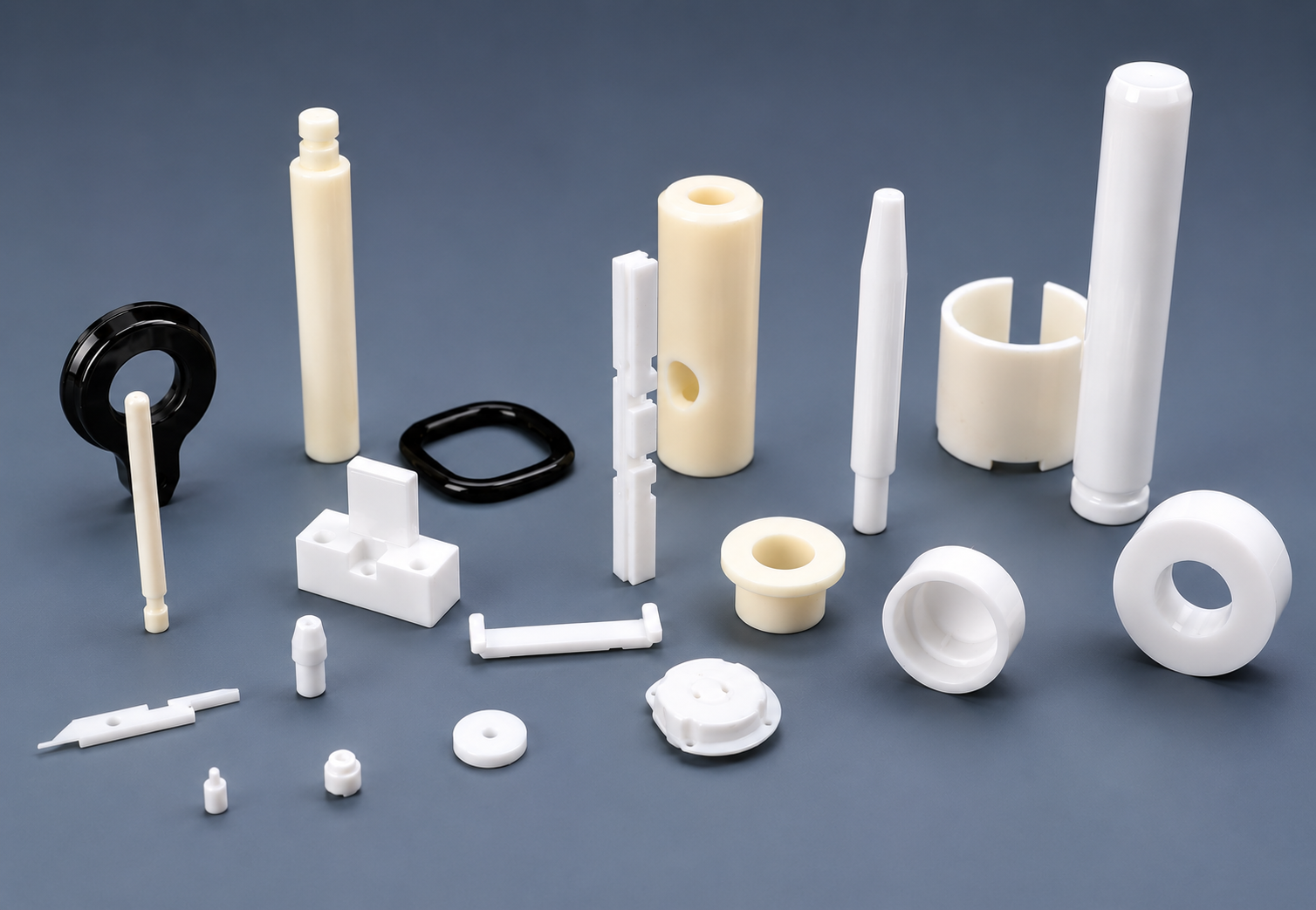
What is Ceramic Injection Moulding (CIM)?
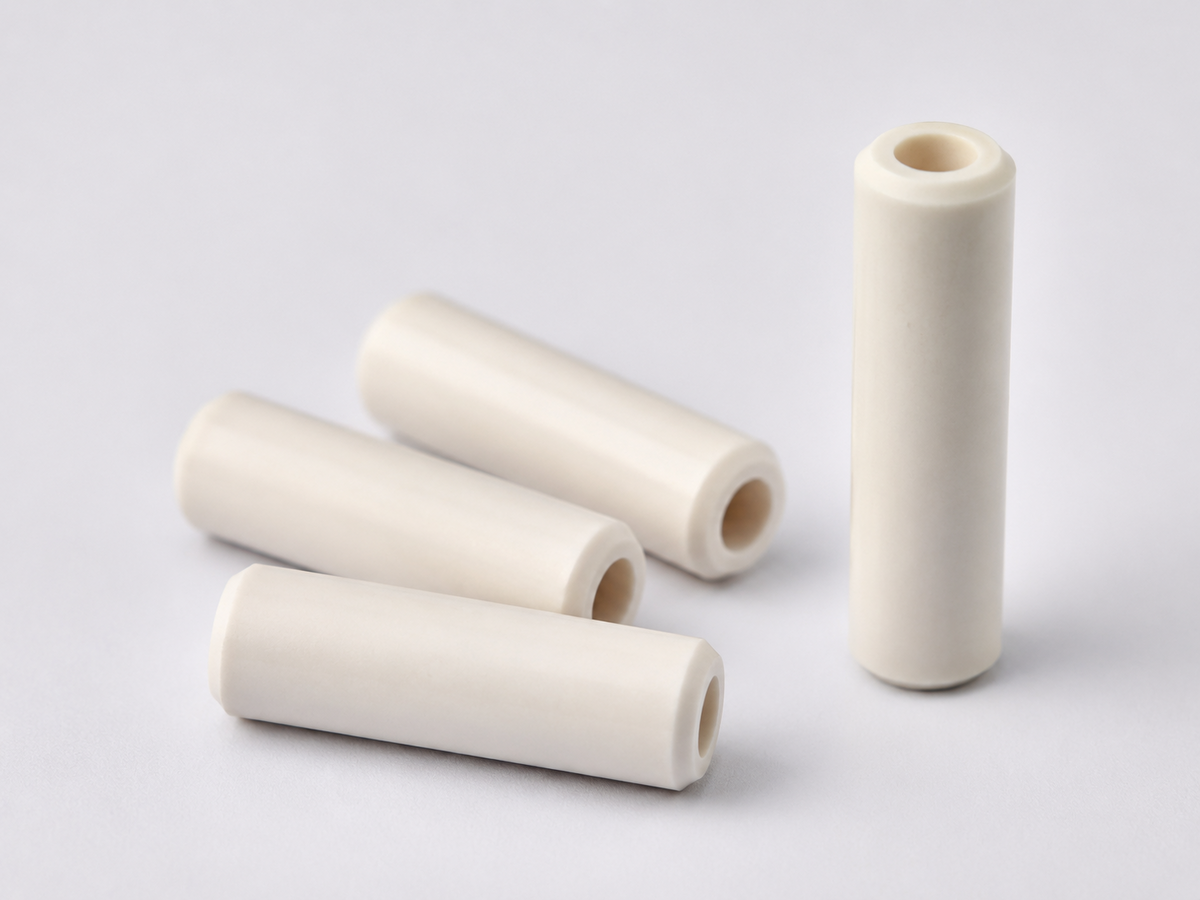
Ceramic Injection Moulding (CIM) is a powder metallurgy-based manufacturing process that uses fine ceramic powders mixed with a polymer binder system to produce complex ceramic components through injection molding.
The process is similar to Metal Injection Moulding (MIM). However, instead of metal powders, CIM uses advanced technical ceramics such as:
- Zirconia (ZrO₂)
- Alumina (Al₂O₃)
- Silicon Nitride (Si₃N₄)
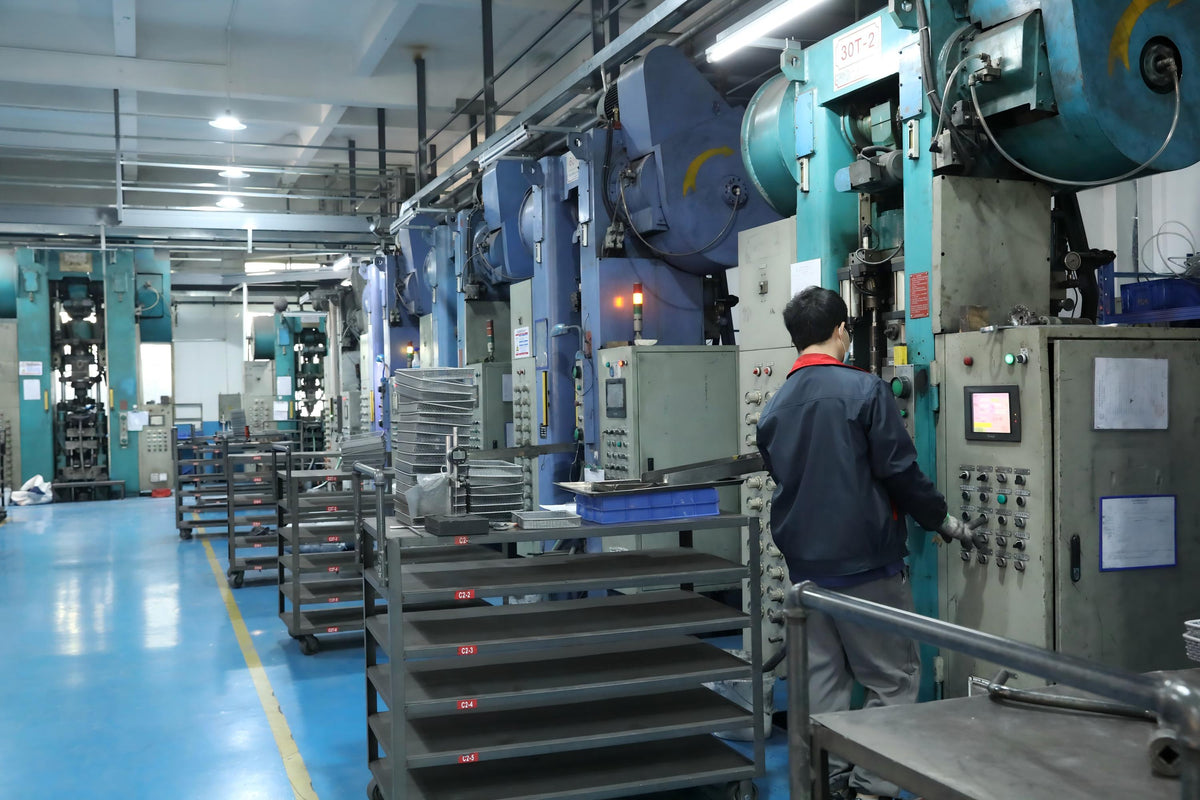
The typical CIM manufacturing process includes:
- Feedstock preparation
- Precision injection molding
- Debinding
- High-temperature sintering
- Secondary machining or surface finishing (if required)
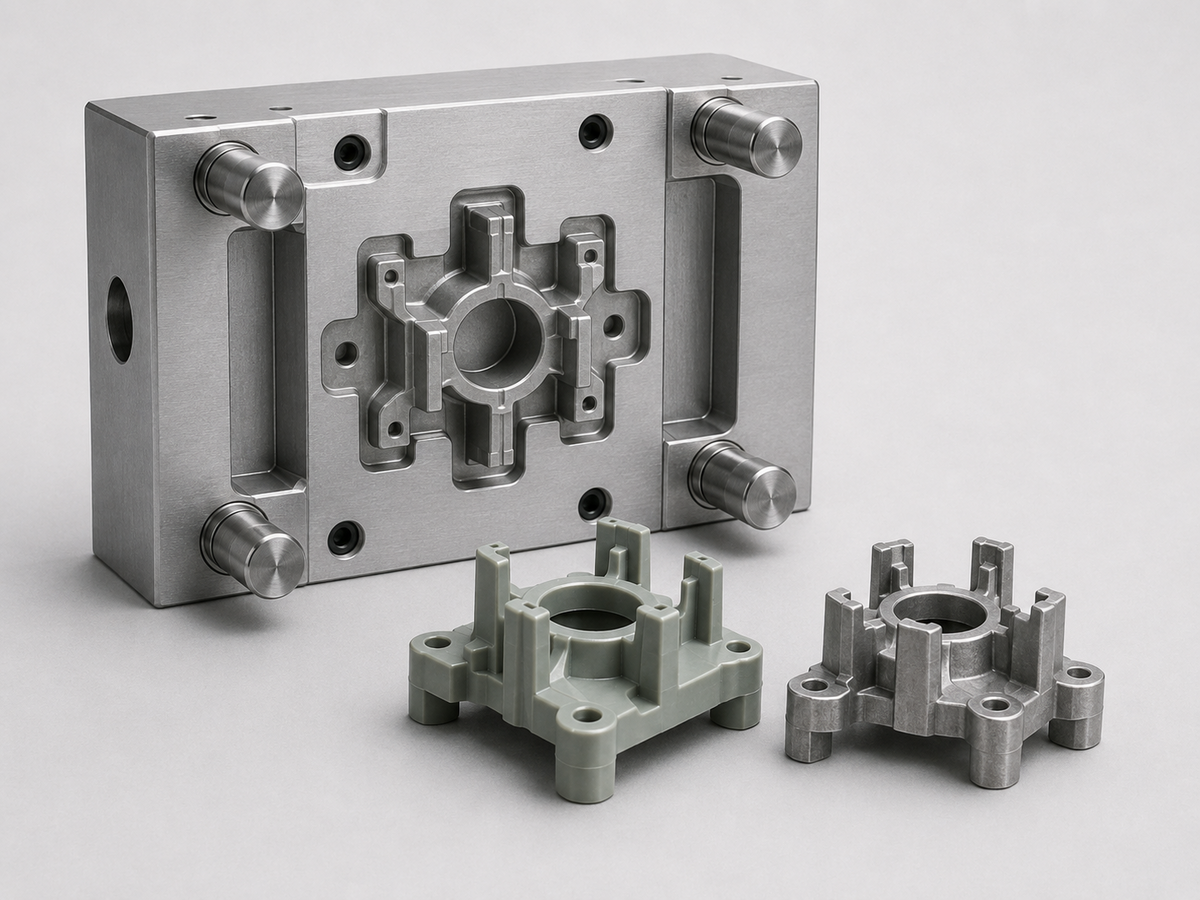
During production, ceramic material is first shaped into a near-net-shape green body. After debinding and sintering, the component achieves its final mechanical, thermal, and electrical properties.

Advantages of Ceramic Injection Moulding
Complex Geometries with High Repeatability
Technical ceramics have excellent hardness and wear resistance, but they are difficult and expensive to machine after sintering.
CIM solves this challenge by forming complex geometries before the material reaches its final hardness.
Key advantages include:
- Complex 3D structures
- Near-net-shape manufacturing
- Reduced material waste
- Excellent batch-to-batch consistency
- Cost advantages for volume production
Superior Ceramic Material Performance
Technical ceramics provide unique advantages compared with metals and polymers:
High Hardness and Wear Resistance
Suitable for components exposed to friction and repeated mechanical stress.
Electrical Insulation
Ideal for electronic, semiconductor, and high-voltage applications.
Thermal Stability
Maintains performance under elevated temperatures.
Chemical Resistance
Provides excellent resistance against corrosive environments.
Low Thermal Expansion
Ensures dimensional stability during temperature changes.

Ceramic Injection Moulding vs Traditional Ceramic Machining
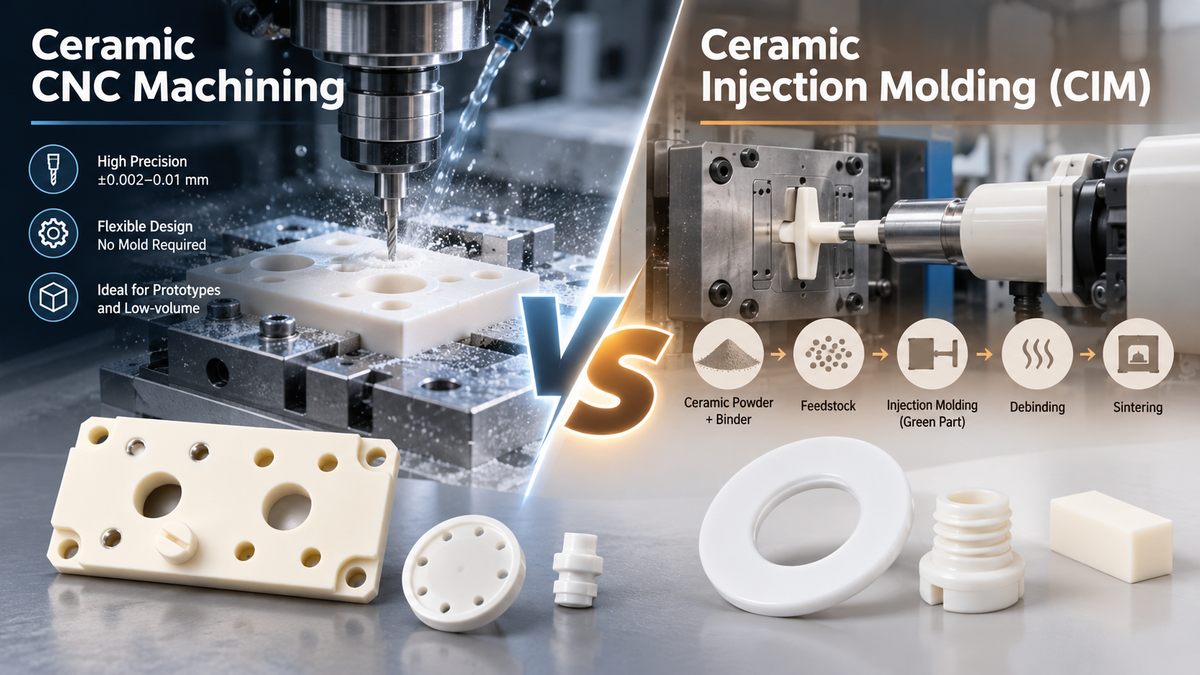
Traditional ceramic machining remains an effective solution for prototypes and low-volume production. However, machining advanced ceramics can become challenging and costly when components require complex geometries, internal features, or large production quantities.
Ceramic Injection Moulding provides several advantages for high-volume and complex ceramic components:
| Ceramic Injection Moulding (CIM) | Traditional Ceramic Machining | |
|---|---|---|
| Complex geometries | Excellent | Limited by cutting tools |
| Production volume | Medium to high volume | Prototype and low volume |
| Material waste | Low | Higher material removal waste |
| Unit cost | Lower for mass production | Higher due to machining time |
| Design flexibility | Suitable for small and intricate parts | Limited for complex structures |
For ceramic components with complicated shapes, CIM can significantly reduce machining difficulty and improve production consistency.
Ceramic Injection Moulding Dimensional Accuracy
Achieving consistent CIM components requires precise control throughout:
- Mold design
- Feedstock formulation
- Injection parameters
- Debinding process
- Sintering conditions
Typical dimensional capability:
| Manufacturing Process | Typical Accuracy |
|---|---|
| As-sintered CIM components | ±0.3% ~ ±0.5% |
| Precision grinding after sintering | Up to ±0.005 mm |
| Secondary CNC machining | According to drawing requirements |
The final tolerance depends on:
- Part size
- Wall thickness
- Material characteristics
- Component geometry
- Required surface finish
For critical functional surfaces, secondary grinding, polishing, or CNC machining can be applied after sintering.

Ceramic Injection Moulding Design Considerations
Successful CIM projects require design optimization before tooling begins.
Important factors include:
Uniform Wall Thickness
Uneven wall thickness can create stress concentration and dimensional variation during sintering.
Shrinkage Compensation
Because ceramic parts shrink significantly during sintering, mold dimensions must be carefully compensated.
Draft Angles and Parting Lines
Proper mold design improves demolding reliability and reduces surface defects.
Critical Tolerance Areas
Features requiring extremely tight tolerances should be identified early for potential secondary machining.
Early DFM analysis helps reduce risks related to:
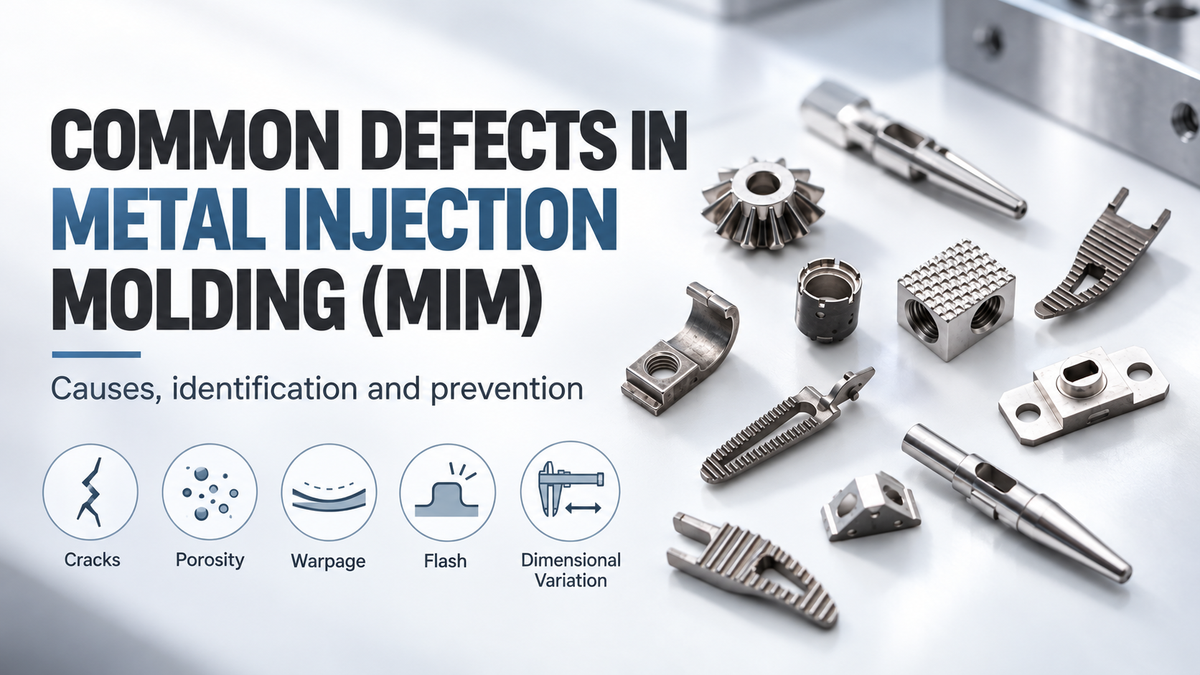
- Cracking
- Warpage
- Dimensional variation
- Production yield
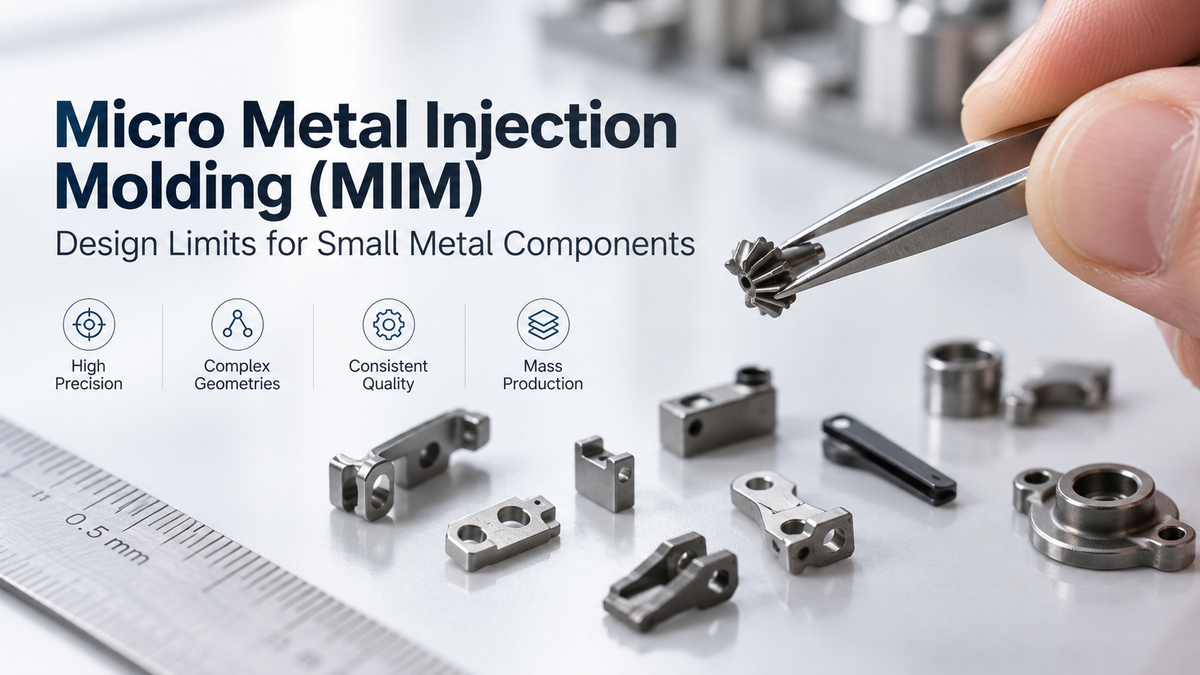
Ceramic Injection Moulding vs MIM
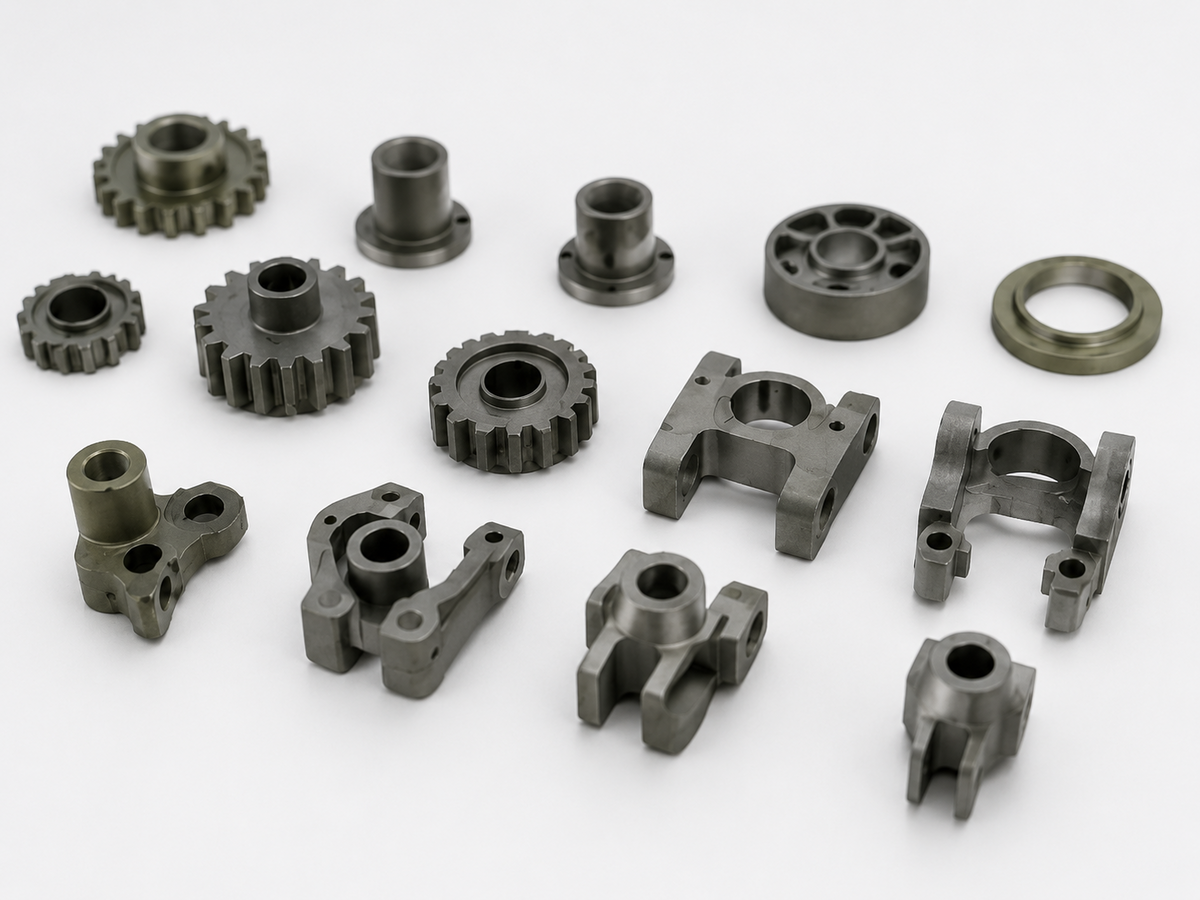
Ceramic Injection Moulding and Metal Injection Moulding share similar manufacturing principles, but they serve different engineering requirements.
| Comparison | CIM | MIM |
|---|---|---|
| Material | Ceramic powders | Metal powders |
| Main advantages | Insulation, hardness, thermal stability | Strength, toughness, metallic properties |
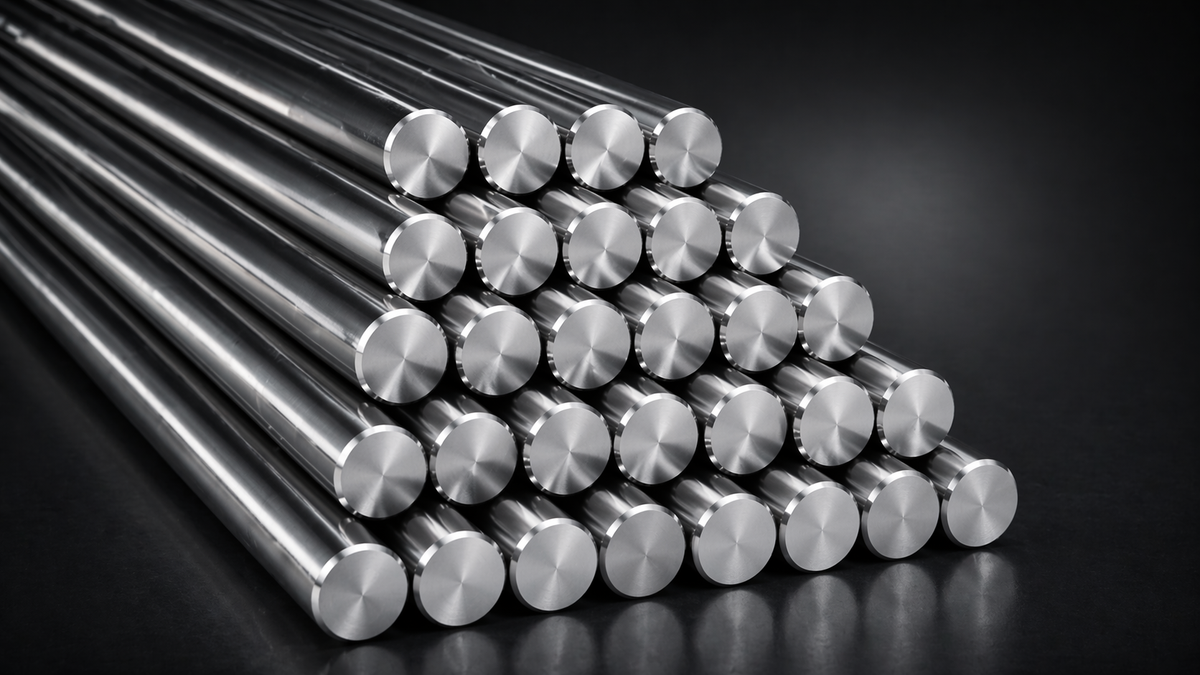
| Common materials | Zirconia, Alumina, Silicon Nitride | Stainless steel, Titanium, Tool steel |
| Typical applications | Semiconductor, medical devices, electronics | Automotive, medical, industrial components |
By combining CIM and MIM manufacturing experience, XY-GLOBAL provides integrated solutions for:
- Metal-ceramic hybrid assemblies
- Precision structural components
- Functional ceramic inserts
- Complex industrial assemblies
Common Ceramic Materials Used in CIM
Zirconia (ZrO₂)
Zirconia offers excellent fracture toughness, strength, and wear resistance.
Applications include:
- Medical device components
- Precision mechanical parts
- Fiber optic components
- Wear-resistant components
Alumina (Al₂O₃)
Alumina is widely used because of its excellent electrical insulation, chemical stability, and cost efficiency.
Applications include:
- Semiconductor insulation parts
- Vacuum components
- Electrical connectors
- Sensor components
Silicon Nitride (Si₃N₄)
Silicon nitride provides excellent thermal shock resistance and mechanical strength.
Applications include:
- High-temperature components
- Precision mechanical systems
- Industrial wear parts
We invite you to view more of our materials.
Applications of CIM Ceramic Components
Semiconductor Industry
Semiconductor equipment requires materials with high purity, dimensional stability, and excellent thermal performance.
CIM ceramic components are used for:
- Wafer handling components
- Ceramic insulation parts
- Plasma-resistant fixtures
- Precision equipment components
For semiconductor manufacturing equipment, ceramic materials are selected because of their excellent plasma resistance, thermal stability, and electrical insulation properties.
Typical CIM ceramic applications include:
- Wafer handling end-effectors
- Ceramic vacuum components
- Plasma chamber components
- Electrical insulation structures
- Precision positioning parts
These components help maintain stable performance in demanding semiconductor fabrication environments.
Medical Devices
Ceramic materials are suitable for medical applications requiring durability, corrosion resistance, and stable performance.
Applications include:
- Surgical device components
- Diagnostic equipment parts
- Precision medical assemblie

Electronics and Sensors
Ceramics provide excellent insulation and dimensional stability for advanced electronic applications.
Applications include:
- Sensor housings
- Ceramic connectors
- Insulating components
- Precision electronic parts
Why Choose XY-GLOBAL for Ceramic Injection Moulding Projects?
XY-GLOBAL provides complete precision manufacturing solutions combining:
- Ceramic Injection Moulding (CIM)
- Metal Injection Moulding (MIM)
- CNC Precision Machining
- Precision Grinding
- Surface Treatment
- Dimensional Inspection
Our engineering team supports projects from prototype development to mass production with:
- DFM analysis
- Mold design support
- Shrinkage simulation
- First Article Inspection (FAI)
- CPK analysis
- Material COA documentation
With ISO9001 and ISO13485 quality systems, XY-GLOBAL supports demanding applications in:
- Semiconductor equipment
- Medical devices
- Precision industrial components
Why XY-GLOBAL Has an Advantage in CIM and MIM
Many suppliers focus on either ceramic or metal injection molding.
XY-GLOBAL combines both technologies, allowing customers to develop complete solutions from metal structural components to high-performance ceramic parts.
This capability is especially valuable for complex assemblies requiring both:
- Mechanical strength
- Electrical insulation
- Wear resistance
- Thermal stability
Have a Precision Ceramic Project?
Ceramic Injection Moulding requires careful control of material selection, mold design, shrinkage compensation, sintering, and final inspection.
XY-GLOBAL supports customers with complete CIM manufacturing solutions from prototype development to reliable mass production.
Upload your ceramic component drawings or 3D CAD files (STEP/IGES) today to receive a free CIM design review, DFM analysis, and quotation from our engineering team.
FAQ
What is Ceramic Injection Moulding (CIM)?
Ceramic Injection Moulding is a manufacturing process that combines ceramic powders with binder systems to produce complex ceramic components through injection molding, debinding, and sintering.
What materials can be used in CIM?
Common materials include zirconia (ZrO₂), alumina (Al₂O₃), and silicon nitride (Si₃N₄).Material selection depends on mechanical strength, thermal resistance, electrical insulation, and application requirements.
Is ceramic injection moulding suitable for mass production?
Yes. CIM is suitable for medium and high-volume production of small, complex ceramic components requiring stable quality and repeatable performance.
What is the difference between CIM and MIM?
CIM uses ceramic powders to achieve properties such as insulation, hardness, and thermal stability.MIM uses metal powders to produce components requiring strength, toughness, and metallic properties.
What tolerance can CIM achieve?
Typical as-sintered CIM tolerances are approximately ±0.3% to ±0.5%.For higher precision requirements, secondary grinding or CNC machining can achieve tolerances down to approximately ±0.005 mm depending on component design and material characteristics.
Can CIM replace traditional ceramic machining?
CIM is ideal for complex ceramic components produced in medium and high volumes, while traditional ceramic machining remains suitable for prototypes, low-volume production, or extremely tight tolerance features.
Share:
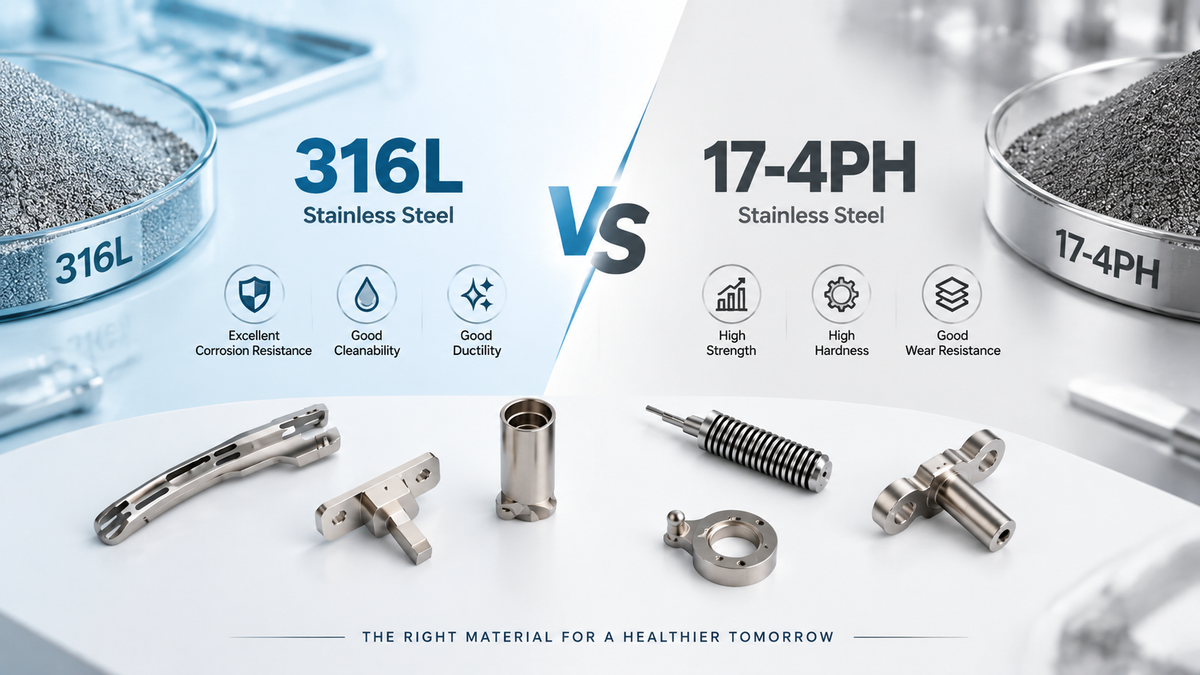
316L Vs 17-4PH for Medical Metal Injection Molding (MIM) Parts
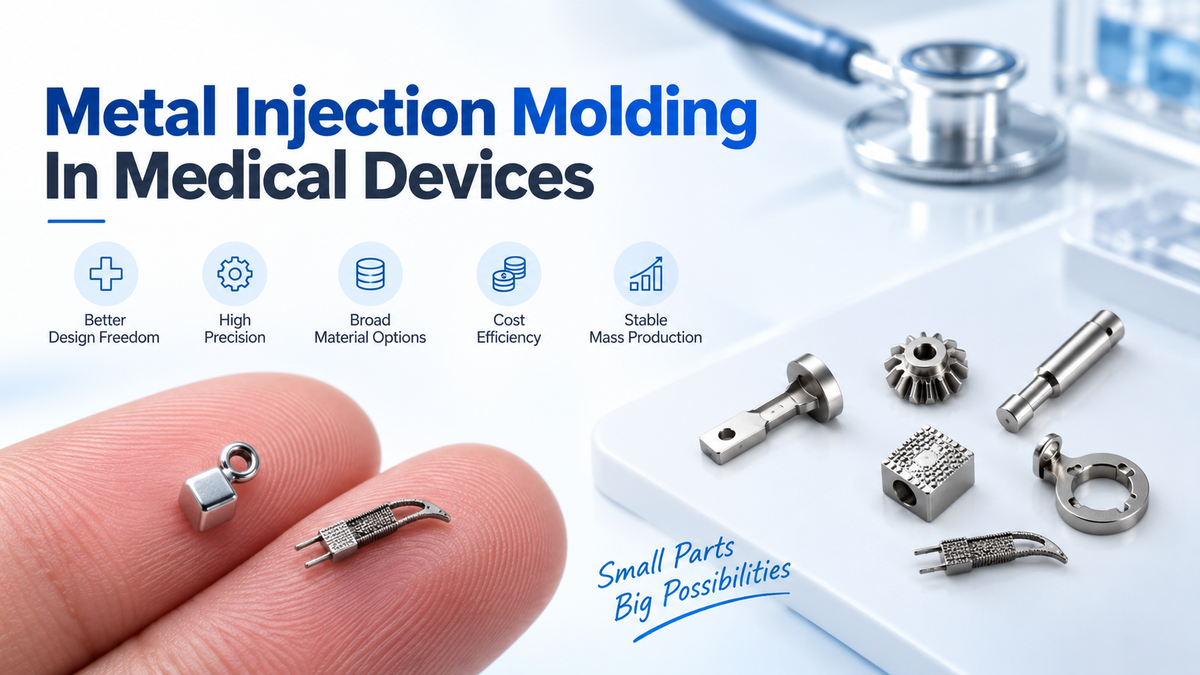
Metal Injection Molding In Medical Devices: Applications, Benefits, Materials And Design Considerations