

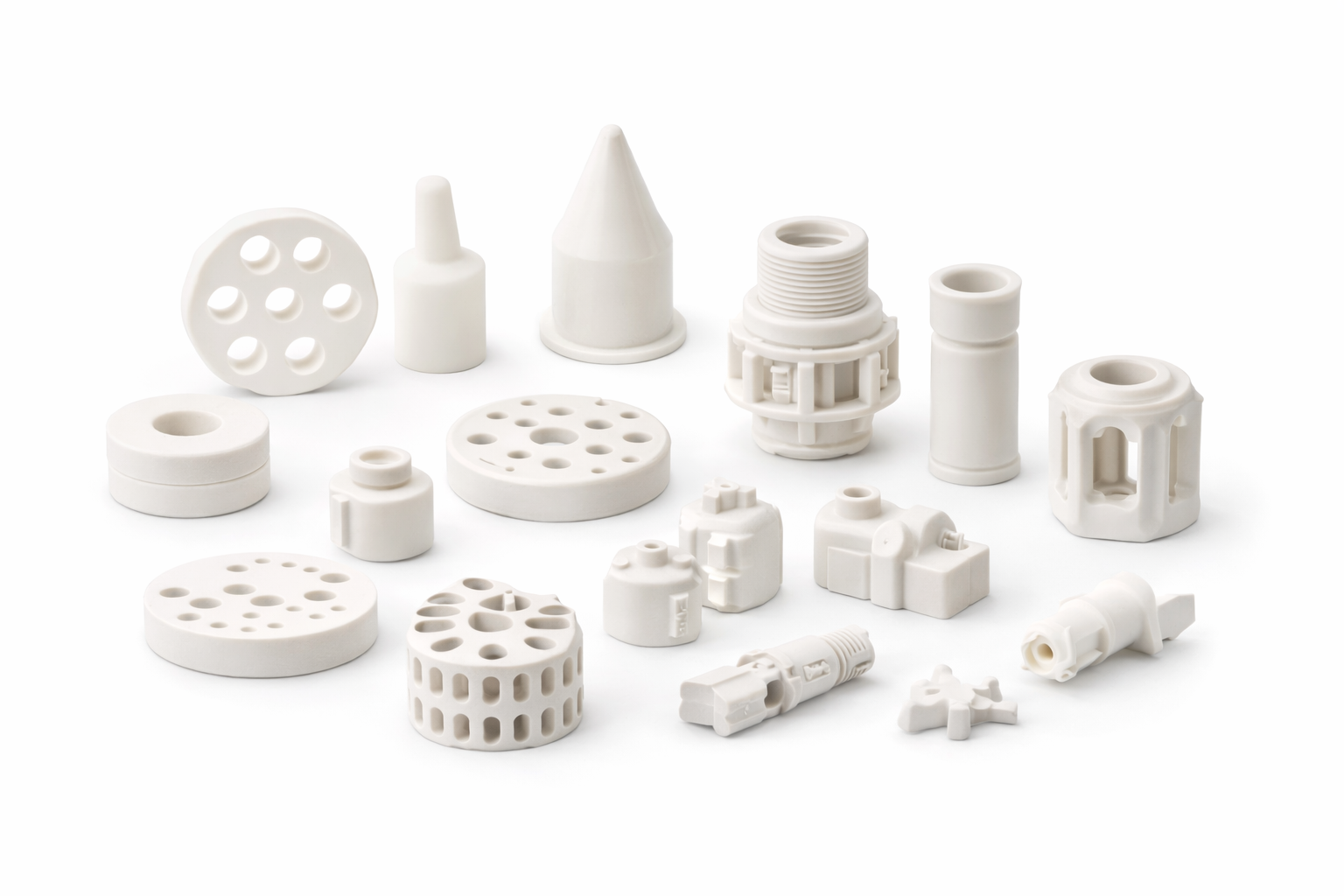
Los materiales de moldeo por inyección de cerámica afectan directamente el rendimiento de la pieza, la facilidad de fabricación y el costo.
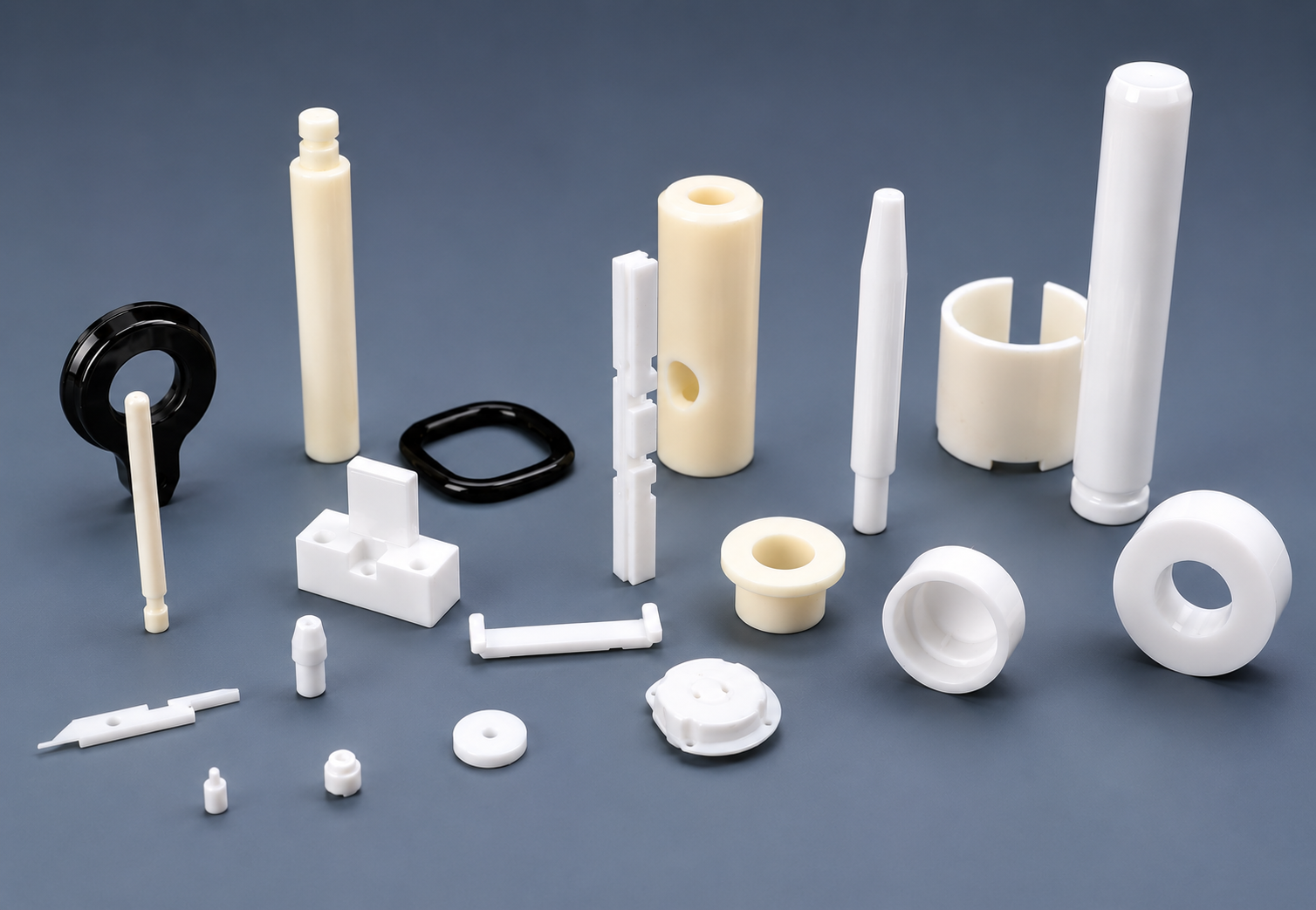
En el CIM, se utilizan materiales comunes como alúmina, circonia, nitruro de silicio y carburo de silicio por diferentes razones. Algunos son mejores para el aislamiento, otros para la tenacidad y otros para aplicaciones de alta temperatura o resistentes al desgaste.
La clave no es solo saber qué materiales existen, sino saber cuál se adapta a su pieza y condiciones de trabajo. Este artículo cubre los principales materiales CIM y cómo elegir el correcto para aplicaciones prácticas.
¿Qué son los materiales de moldeo por inyección de cerámica?
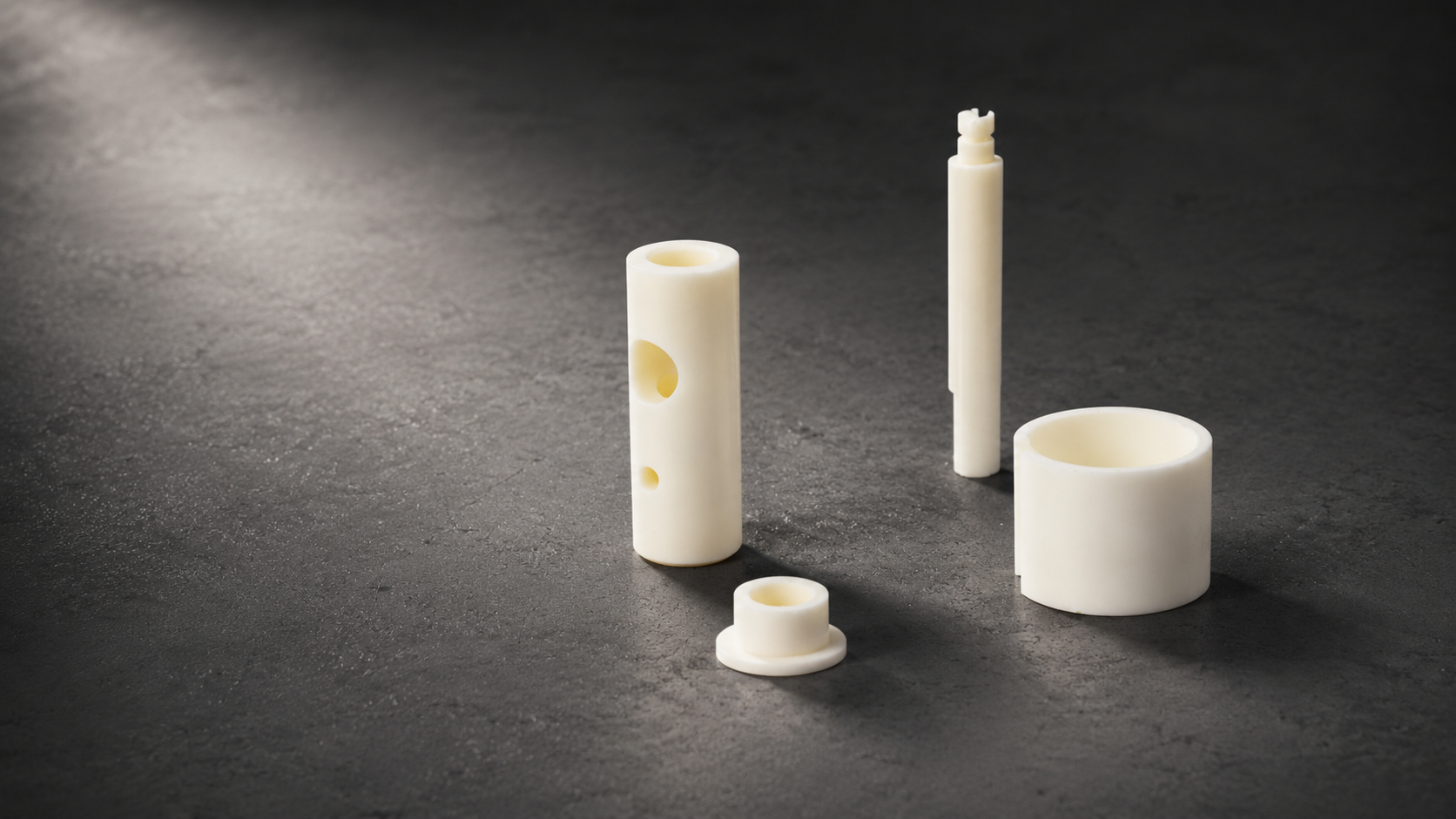
Los materiales de moldeo por inyección de cerámica son materias primas cerámicas utilizadas en el proceso CIM. Se fabrican mezclando polvos cerámicos finos con aglutinantes para que el material pueda moldearse, desaglomerarse y sinterizarse en piezas cerámicas densas.
La selección de materiales en CIM no solo se trata de las propiedades finales. También afecta el comportamiento del moldeo, el control de la contracción, la estabilidad dimensional y la consistencia de la producción.
Por lo tanto, es por eso que elegir el material correcto es importante al principio del proyecto.
Materiales comunes utilizados en el moldeo por inyección de cerámica
| Material | Características clave | Aplicaciones típicas |
|---|---|---|
| Alúmina (Al₂O₃) | Alta dureza, buena resistencia al desgaste, fuerte aislamiento eléctrico, rentable | Aisladores eléctricos, boquillas, piezas de desgaste, componentes médicos |
| Circonia (ZrO₂) | Alta resistencia, mejor tenacidad, acabado superficial liso, buena biocompatibilidad | Piezas médicas, componentes de válvulas, piezas estructurales de precisión |
| Nitruro de silicio (Si₃N₄) | Alta resistencia, resistencia al choque térmico, buena resistencia al desgaste | Cojinetes, piezas relacionadas con motores, componentes industriales |
| Carburo de silicio (SiC) | Muy alta dureza, resistencia a la corrosión, conductividad térmica, estabilidad a altas temperaturas | Piezas de semiconductores, sellos, componentes resistentes al desgaste |
Cómo elegir el material adecuado para su pieza
Comience con la función real de la pieza.
Si la pieza necesita resistencia al desgaste, la alúmina suele ser una opción práctica, mientras que el carburo de silicio puede ser mejor para condiciones más exigentes.
Si la pieza necesita una mejor tenacidad o acabado superficial, la circonia suele ser preferida.
Si la pieza se enfrentará a altas temperaturas o choque térmico, se considera comúnmente el nitruro de silicio.
Si la pieza funcionará en un entorno corrosivo o hostil, el carburo de silicio puede ser una mejor opción.
El costo también importa. En muchos proyectos, el mejor material no es el de mayor rendimiento, sino el que cumple con los requisitos de función, proceso y presupuesto.
¿Necesita soporte con la selección de materiales CIM? Visite nuestra página de servicio CIM para saber cómo le ayudamos con la revisión de diseño, la creación de prototipos y la producción.
Preguntas frecuentes
¿Qué material CIM es mejor para piezas resistentes al desgaste?
La alúmina es a menudo la primera opción para piezas resistentes al desgaste. Para condiciones más duras, el carburo de silicio puede ofrecer una mejor dureza y resistencia a la corrosión.
¿La circonia es mejor que la alúmina para piezas médicas?
No siempre. La circonia a menudo se elige por su mejor tenacidad y acabado superficial, mientras que la alúmina sigue siendo una opción práctica para muchas piezas médicas.
¿Qué material CIM es mejor para el aislamiento eléctrico?
La alúmina es uno de los materiales CIM más utilizados para el aislamiento eléctrico porque combina un rendimiento de aislamiento fiable con una buena resistencia al desgaste.
¿Cuál es el material más rentable para piezas CIM?
En muchos casos, la alúmina es la opción más rentable porque ofrece un buen rendimiento general, un procesamiento estable y una amplia idoneidad para aplicaciones.
¿Puede un material CIM cumplir tanto con los requisitos de resistencia como de alta temperatura?
Sí. El nitruro de silicio a menudo se selecciona cuando una pieza necesita un fuerte rendimiento mecánico y una buena resistencia al choque térmico.
Compartir:
Guía de la tecnología MIM (moldeo por inyección de metal) 2026: la forma inteligente de fabricar piezas metálicas pequeñas y complejas en grandes volúmenes
Acero inoxidable 17-4PH vs 304 para componentes de moldeo por inyección de metal (MIM)