

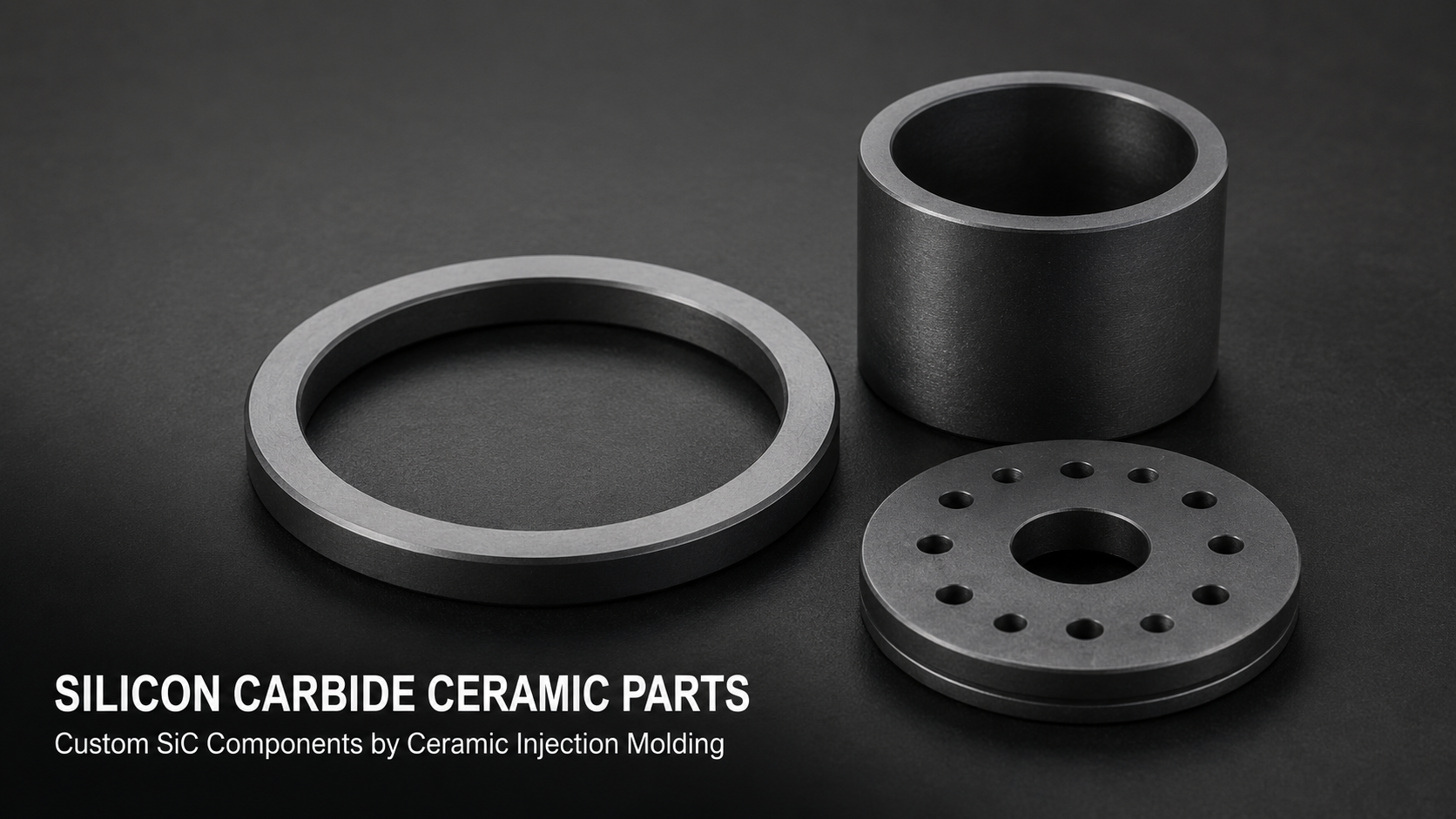
Когда применение требует исключительной твердости, высокой теплопроводности и устойчивости к химическому воздействию при температурах, при которых большинство материалов выходят из строя, детали из карбида кремния являются предпочтительной инженерной керамикой. SiC сочетает в себе свойства, которые никакой другой распространенный керамический материал не может воспроизвести вместе — твердость, приближающуюся к твердости алмаза, теплопроводность, сравнимую с некоторыми металлами, и почти полную химическую инертность, что делает его незаменимым в оборудовании для обработки полупроводников, уплотнениях промышленных насосов и высокотемпературной термической обработке.
Для сложных геометрий SiC, производимых в производственных объемах, керамическое литье под давлением (CIM) является наиболее экономически эффективным методом производства. Это руководство охватывает свойства материала SiC, то, как CIM используется для производства прецизионных деталей из карбида кремния, ключевые применения и правила проектирования, обеспечивающие надежность деталей.

Ключевые свойства деталей из карбида кремния
Карбид кремния занимает уникальное положение среди инженерной керамики, поскольку он сочетает в себе высокие механические характеристики с превосходными термическими свойствами — комбинацию, которую большинство керамических материалов не могут достичь одновременно.
Механические свойства
- Твердость: 2400–2800 HV — самый твердый из распространенных керамических материалов для CIM, значительно выше, чем у оксида алюминия (1500–1700 HV) и диоксида циркония (1200 HV)
- Прочность на изгиб: 400–550 МПа для спеченного SiC — ниже, чем у диоксида циркония, но достаточная для большинства промышленных применений
- Модуль Юнга: 410–430 ГПа — одна из самых жестких инженерных керамик, важная для стабильности размеров под нагрузкой
- Вязкость разрушения: 3–4 МПа·м⁰·⁵ — ниже, чем у диоксида циркония, что делает SiC более чувствительным к концентрациям напряжений при проектировании деталей
- Плотность: 3,10–3,16 г/см³ — легкий для своего уровня механических характеристик
Термические свойства
Термические свойства SiC наиболее резко отличают его от других инженерных керамик:
- Теплопроводность: 120–180 Вт/м·К для спеченного SiC — в 6–8 раз выше, чем у оксида алюминия, и в 50–70 раз выше, чем у диоксида циркония. Это делает SiC эффективным материалом для управления температурным режимом и объясняет его использование в подложках и носителях пластин в полупроводниковых приложениях.
- Коэффициент теплового расширения: 4,0–4,5 × 10⁻⁶/К — очень низкий, что обеспечивает отличную стабильность размеров в циклах изменения температуры
- Максимальная рабочая температура: примерно 1500°C в окислительной атмосфере; до 1700°C в инертной или вакуумной среде — выше, чем у оксида алюминия, и значительно выше, чем у диоксида циркония
- Термостойкость: отличная, благодаря сочетанию высокой теплопроводности, низкого теплового расширения и высокой жесткости
Химическая стойкость
Спеченный SiC устойчив практически ко всем кислотам, щелочам и органическим растворителям. Он устойчив к фтористоводородной кислоте, фосфорной кислоте, соляной кислоте и гидроксиду натрия — химическим средам, которые разрушают большинство металлов и некоторые другие керамические материалы. Эта химическая инертность в сочетании с высокой твердостью делает SiC предпочтительным материалом для уплотнений насосов и компонентов, контактирующих с жидкостью, в химической промышленности.
Типы карбида кремния, используемые для прецизионных деталей
Спеченный карбид кремния (SSiC)
Беспрессовый спеченный SiC (SSiC) получают путем спекания мелкого порошка SiC с небольшими добавками бора и углерода в качестве спекающих добавок при температурах 2050–2200°C. В результате получается плотный, чистый материал SiC с более чем 98% теоретической плотности, не содержащий свободного кремния. SSiC обладает всеми описанными выше механическими и термическими свойствами и может непрерывно работать при температурах до 1500°C на воздухе.
SSiC является предпочтительной маркой для большинства прецизионных инженерных применений — компонентов полупроводниковых процессов, уплотнений химических насосов и высокопроизводительных изнашиваемых деталей — где требуются максимальная твердость, химическая стойкость и температурные возможности.
Карбид кремния, полученный реакционным спеканием (RBSiC / SiSiC)
Карбид кремния, полученный реакционным спеканием, производится путем инфильтрации пористой SiC-углеродной заготовки расплавленным кремнием при температуре около 1450°C. Кремний реагирует с углеродом, образуя дополнительный SiC, и избыточный кремний заполняет оставшуюся пористость. Окончательная деталь содержит примерно 8–15% свободного кремния.
RBSiC предлагает более низкую себестоимость производства, чем SSiC, благодаря более низким температурам спекания и почти нулевой усадке во время обработки. Однако присутствие свободного кремния ограничивает максимальную рабочую температуру примерно 1350–1380°C, а свободный кремний снижает химическую стойкость в сильно окислительных или щелочных средах. Для применений в этих температурных и химических пределах RBSiC является экономически эффективной альтернативой.

Как детали из карбида кремния производятся методом CIM
CIM для SiC проходит тот же четырехступенчатый процесс, что и другие методы керамического литья под давлением — подготовка сырья, литье под давлением, удаление связующего и спекание — но с параметрами процесса, специфичными для SiC.
Исходный материал готовится из тонкого порошка SiC (средний размер частиц обычно 0,5–1 мкм) с добавками карбида бора и углерода для SSiC, смешанного с термопластичным связующим. Исходный материал отливается под давлением при температуре расплава 150–180°C в прецизионные стальные формы. После удаления связующего необожженные детали спекаются при 2050–2200°C в вакуумной или инертной атмосфере для достижения полной плотности. Линейная усадка при спекании составляет 18–22%, что учитывается при проектировании формы.
Почему CIM используется для сложных геометрий SiC
SiC является одним из самых трудных в обработке инженерных материалов в полностью спеченном состоянии. При твердости 2400–2800 HV спеченный SiC требует алмазного инструмента для всех операций обработки — это медленно, дорого и сопряжено со значительным износом инструмента. Сложные внутренние элементы, подрезы, тонкие стенки и изогнутые поверхности, которые являются обычными в CIM, становятся слишком дорогими при обработке из спеченных заготовок.
CIM производит полную геометрию, близкую к окончательной форме, на стадии формования, сокращая послеспекальную обработку только до критических размеров — обычно диаметры отверстий, уплотнительные поверхности и сопрягаемые поверхности. Это делает CIM экономически жизнеспособным методом для сложных компонентов SiC при объемах производства, превышающих несколько сотен штук в год.
Применение деталей из карбида кремния
Оборудование для обработки полупроводников
Карбид кремния широко используется в оборудовании для изготовления полупроводников, особенно в процессах, связанных с плазмой, высокотемпературным осаждением и химическими парами. Распространенные компоненты из SiC включают фокусирующие кольца и краевые кольца в камерах плазменного травления, которые должны выдерживать реактивное плазменное травление, сохраняя при этом стабильность размеров; лодки для переноса пластин и подложки, используемые в диффузионных печах и реакторах для эпитаксиального роста, где высокая теплопроводность и чистота SiC имеют решающее значение; а также облицовки камер процесса и экраны, которые защищают алюминиевые стенки камер от коррозионных технологических газов.
Сочетание химической стойкости SiC к фторсодержащим газам для травления, стабильности размеров при повышенных температурах и возможности очистки и восстановления делает его одним из наиболее востребованных керамических материалов при проектировании полупроводникового оборудования.
Промышленные механические уплотнения и компоненты насосов
Торцевые уплотнения из SiC являются промышленным стандартом для химических насосов, насосов для суспензий и технологических насосов, работающих с коррозионными, абразивными или высокотемпературными жидкостями. Пары торцевых уплотнений SiC-на-SiC обеспечивают отличную способность к сухому ходу и самый длительный срок службы среди распространенных комбинаций материалов торцевых уплотнений. Химическая стойкость SiC практически ко всем технологическим химикатам, включая HF, который разрушает большинство керамических материалов, делает его единственным жизнеспособным материалом для некоторых применений в химической промышленности.
Помимо торцевых уплотнений, SiC используется в подшипниках насосов, втулках, соплах и седлах клапанов в сложных условиях химической и фармацевтической промышленности.
Высокотемпературные компоненты для термической обработки
Печная мебель из SiC — саттеры, капсели, балки и опорные трубки — используется в промышленных печах для спекания передовой керамики, термической обработки металлов и обжига электронных компонентов. Термостойкость и ползучесть SiC при температурах выше 1200°C делают его превосходящим печную мебель из оксида алюминия в высокопроизводительных процессах термической обработки.
Сопла горелок, радиантные трубки и компоненты камер сгорания в высокотемпературных промышленных печах также изготавливаются из SiC, где критически важны стойкость материала к окислению и структурная стабильность при рабочих температурах выше 1300°C.
Износостойкие компоненты
В приложениях, связанных с абразивными суспензиями, эрозией твердыми частицами или скользящим контактом под высокой нагрузкой, исключительная твердость SiC обеспечивает срок службы, который не могут обеспечить металлы и большинство других керамических материалов. Износостойкие детали из SiC используются в оборудовании для обработки песка и гравия, трубопроводах для суспензий в горнодобывающей промышленности, нитенаправителях в текстильном производстве и абразивных пескоструйных соплах. Сочетание твердости и малой массы (плотность 3,1 г/см³) особенно ценно в вращающихся изнашиваемых компонентах, где масса имеет значение.

SiC против оксида алюминия против диоксида циркония: выбор материала для керамических деталей
Три наиболее распространенных керамических материала для CIM занимают различные ниши по производительности. Выбор между ними зависит от приоритетных требований применения:
- Твердость и износостойкость при высокой нагрузке: SiC — очевидный выбор. Его твердость 2400–2800 HV значительно превышает как оксид алюминия, так и диоксид циркония и обеспечивает самый длительный срок службы в абразивных или эрозионных средах.
- Теплопроводность и работа при высоких температурах: SiC превосходит другие материалы. Теплопроводность 120–180 Вт/м·К по сравнению с 20–30 у оксида алюминия и 2–3 у диоксида циркония делает SiC единственной жизнеспособной керамикой для теплогенерирующих или теплоотводящих применений при температурах выше 1000°C.
- Вязкость разрушения и устойчивость к ударам или острому контакту: Диоксид циркония (3Y-TZP) — очевидный выбор. Его механизм трансформационного упрочнения обеспечивает вязкость разрушения 5–10 МПа·м⁰·⁵ — более чем в два раза выше, чем у SiC. Для деталей, подвергающихся ударным нагрузкам или контакту с острыми краями, диоксид циркония значительно надежнее.
- Химическая стойкость в агрессивных средах: SiC — лучший материал, особенно в средах с HF и смешанными кислотами. Оксид алюминия разрушается в сильных щелочах; диоксид циркония подвергается воздействию HF при повышенных температурах; SiC устойчив к обоим.
- Биосовместимость и эстетические требования: Диоксид циркония. SiC имеет черно-серый цвет и не используется в медицинских или стоматологических видимых приложениях.
- Стоимость: Оксид алюминия — самый дешевый керамический материал для CIM. Диоксид циркония — средний. SiC — самый дорогой вариант из-за высокой температуры спекания и специальных требований к печам. Для применений, которые могут быть выполнены с использованием оксида алюминия или диоксида циркония, они являются более экономически эффективным выбором.
Соображения по проектированию деталей CIM из SiC
Детали CIM из SiC следуют общим правилам проектирования керамических CIM, с дополнительным акцентом на предотвращение концентрации напряжений из-за более низкой вязкости разрушения SiC по сравнению с диоксидом циркония.
Толщина стенок: Минимум 0,8 мм; предпочтительный диапазон 1,5–12 мм. Равномерная толщина стенок имеет решающее значение — дифференциальная усадка при спекании из-за неравномерной толщины сечения является основной причиной деформации деталей CIM из SiC.
Радиусы углов: Все внутренние углы должны иметь радиус не менее R0,3 мм. Острые внутренние углы концентрируют напряжения в уже низкопрочном материале и являются основной причиной разрушения при эксплуатации. Большие радиусы — R1 мм или более, где это позволяет геометрия — значительно улучшают усталостную прочность и ударопрочность.
Шлифовка после спекания: Алмазная шлифовка SiC после спекания дороже, чем шлифовка оксида алюминия или диоксида циркония из-за более высокой твердости SiC и связанного с этим износа инструмента. Минимизация количества и площади шлифованных поверхностей в конструкции значительно снижает общую стоимость детали. Указывайте шлифовку только на действительно критических сопрягаемых, уплотнительных или установочных поверхностях.
Допуски: После спекания ±0,3–0,5% от номинального. Алмазная шлифовка обеспечивает ±0,01 мм на критических поверхностях. Плоскостность уплотнительной поверхности менее 0,001 мм (1 мкм) достигается притиркой.
Пример применения: уплотнительные кольца CIM из SiC для химического насоса
Клиенту, производящему дозирующие насосы для полупроводниковой мокрой обработки, требовались уплотнительные кольца из SiC для механических уплотнений, способные работать со смесью фтористоводородной кислоты и перекиси водорода при повышенных температурах — комбинация, которая разрушала их предыдущие уплотнительные кольца из оксида алюминия в течение нескольких недель эксплуатации.
Геометрия уплотнительного кольца включала ступенчатый наружный диаметр, прецизионную плоскую уплотнительную поверхность и ряд приводных пазов на задней поверхности — комбинация особенностей, которая делала механическую обработку из спеченной заготовки SiC дорогой и медленной. Мы предложили SSiC CIM для формирования полной геометрии, близкой к окончательной форме, при этом только плоская уплотнительная поверхность требовала притирки после спекания.
Материал: SSiC (спеченный карбид кремния с добавками бора и углерода для спекания). Первая проверка изделия подтвердила плотность 3,14 г/см³ (99,4% от теоретической), плоскостность уплотнительной поверхности 0,8 мкм и подтверждение химической стойкости путем погружения в указанную клиентом химическую среду. Детали прошли полевую проверку без заметного износа или химической деградации после шести месяцев непрерывной работы — значительно превысив срок службы уплотнений из оксида алюминия.

Что предоставить для запроса коммерческого предложения на детали из карбида кремния
- 2D-чертеж со всеми размерами, допусками и требованиями к шероховатости поверхности на критических поверхностях
- 3D-модель в формате STEP, STP, X_T или IGES
- Требования к марке SiC — SSiC (спеченный SiC) или RBSiC (карбид кремния, полученный реакционным спеканием), если указано; если не уверены, укажите рабочую температуру и химическую среду, и мы дадим рекомендацию
- Количество прототипов, количество пробной партии и оценочный годовой объем
- Описание применения, включая рабочую температуру, давление, контактные среды и соответствующие режимы отказов
- Требования к финишной обработке после спекания — плоскостность уплотнительной поверхности, допуск на отверстие, шероховатость поверхности на скользящих поверхностях
Часто задаваемые вопросы
Для чего используются детали из карбида кремния?
Детали из карбида кремния используются преимущественно в оборудовании для обработки полупроводников (фокусирующие кольца, носители пластин, компоненты камер), промышленных механических уплотнениях насосов, высокотемпературной печной мебели и компонентах сгорания, а также износостойких деталях в абразивных средах. SiC выбирается, когда приложения требуют исключительной твердости, высокотемпературной производительности выше 1000°C или химической стойкости к HF и другим агрессивным средам.
Как производятся детали из карбида кремния?
Сложные компоненты из SiC изготавливаются методом керамического литья под давлением (CIM) для серийного производства или прессованием и спеканием для более простых геометрий. Спеченный SiC (SSiC) требует спекания при 2050–2200°C в вакууме или инертной атмосфере. Алмазная шлифовка после спекания доводит до требуемых критических размеров. Механическая обработка спеченного SiC из заготовок возможна, но дорога из-за исключительной твердости материала, требующей алмазного инструмента.
В чем разница между спеченным SiC и SiC, полученным реакционным спеканием?
Спеченный SiC (SSiC) — это полностью плотный SiC без свободного кремния, обладающий максимальной твердостью, химической стойкостью и температурными возможностями до 1500°C на воздухе. SiC, полученный реакционным спеканием (RBSiC), содержит 8–15% свободного кремния, что снижает стоимость и температуру спекания, но ограничивает максимальную рабочую температуру примерно 1380°C и снижает химическую стойкость в определенных средах. SSiC предпочтителен для требовательных применений; RBSiC подходит для экономически чувствительных применений в пределах своих рабочих характеристик.
Как карбид кремния сравнивается с оксидом алюминия в керамических деталях?
SiC тверже, более теплопроводен, более химически стоек и способен работать при более высоких температурах, чем оксид алюминия. Оксид алюминия дешевле и обладает более высокой вязкостью разрушения, чем SiC. Для применений с умеренными температурами, где свойства SiC не требуются, оксид алюминия является более экономичным выбором. Для полупроводниковых, химических и высокотемпературных применений превосходные свойства SiC оправдывают более высокую стоимость.
Тверже ли карбид кремния, чем диоксид циркония?
Да. Твердость карбида кремния составляет 2400–2800 HV по сравнению с 1200 HV у диоксида циркония. SiC значительно тверже и более износостоек. Однако диоксид циркония обладает гораздо более высокой вязкостью разрушения (5–10 МПа·м⁰·⁵ против 3–4 МПа·м⁰·⁵ у SiC), что делает диоксид циркония более устойчивым к распространению трещин и ударным нагрузкам. SiC предпочтителен там, где доминируют твердость и износостойкость; диоксид циркония предпочтителен там, где важны ударопрочность, биосовместимость или соответствие термическому расширению металл-керамика.
Керамические детали из карбида кремния обладают сочетанием твердости, теплопроводности и химической стойкости, с которым не может сравниться никакая другая распространенная CIM-керамика. Для компонентов полупроводниковых процессов, уплотнений химических насосов и высокотемпературных промышленных деталей SiC, как правило, является единственным материалом, отвечающим всем требованиям к эксплуатационным характеристикам. Свяжитесь с нами, предоставив свой чертеж и требования к применению, для получения рекомендаций по материалам и оценки возможности изготовления методом CIM.

Делиться:
Литьевое формование из диоксида циркония: процесс, проблемы и руководство по проектированию деталей из ZrO2, изготовленных методом литья под давлением
Прессование металлического порошка: руководство по процессу и сравнение с MIM для изготовления прецизионных металлических деталей