

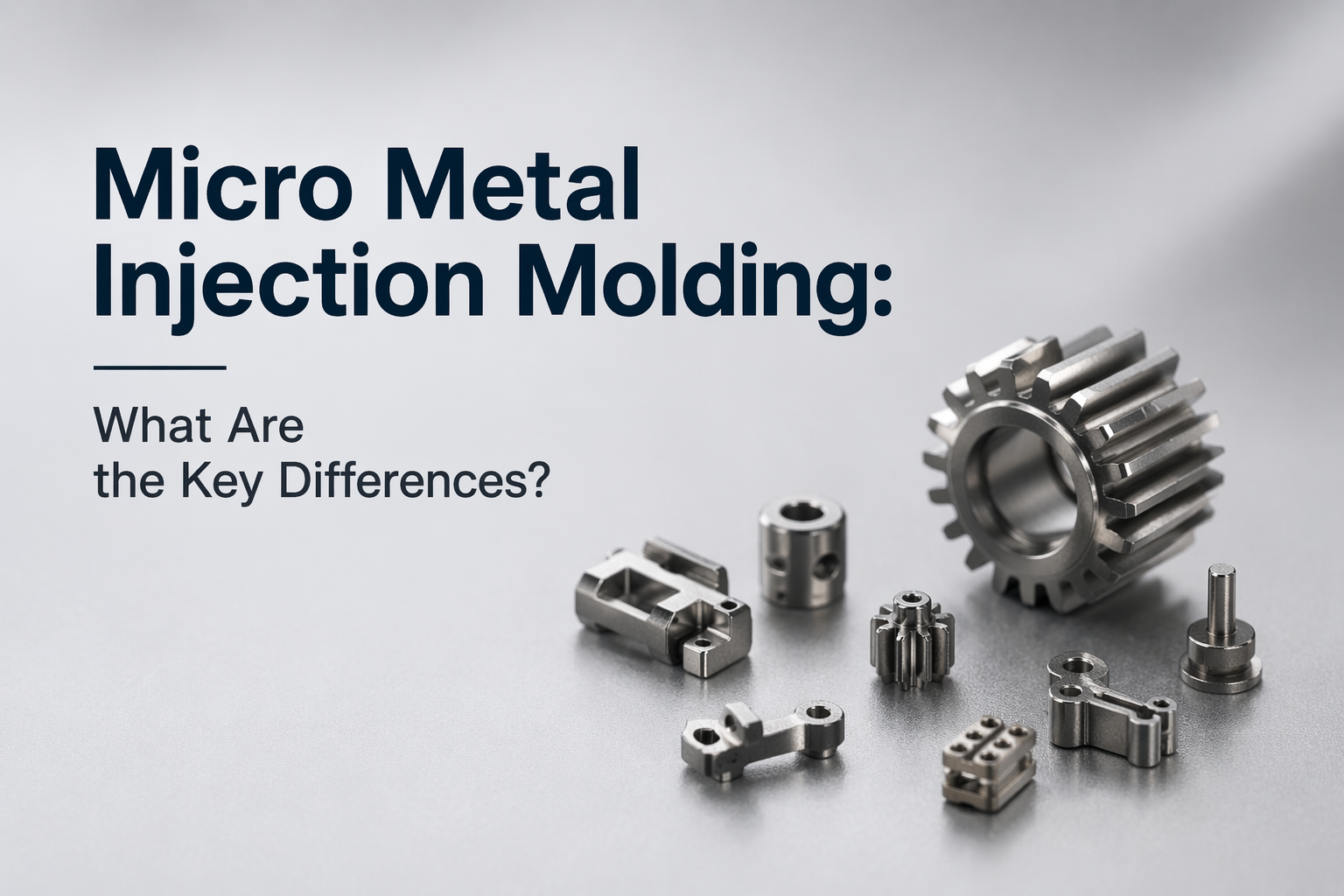
El moldeo por inyección de metal ya es conocido como un proceso eficiente para producir piezas metálicas pequeñas y complejas en volumen. Sin embargo, cuando el tamaño de la pieza continúa reduciéndose y las características requeridas se vuelven más finas, el MIM convencional ya no es suficiente para describir el desafío de fabricación. Aquí es donde el micromoldeo por inyección de metal, a menudo llamado micro MIM, se convierte en una categoría distinta.
Aunque el micro MIM se basa en el mismo principio general que el MIM estándar, la diferencia no es simplemente que las piezas sean más pequeñas. La verdadera diferencia radica en cómo las dimensiones pequeñas afectan cada etapa de producción, incluyendo el diseño del molde, el comportamiento de la materia prima, el llenado, el desaglomerado, la sinterización, la inspección y el control de rendimiento.
A medida que la geometría de la pieza se vuelve más miniatura, la tolerancia del proceso se vuelve más estrecha y la estabilidad de la fabricación se vuelve mucho más difícil de mantener.
Por eso, el micro MIM suele elegirse para industrias que requieren piezas metálicas en miniatura con tolerancias estrictas, geometrías intrincadas y calidad de producción repetible.
Tamaño de la pieza y escala de las características
La primera y más obvia diferencia entre el micro MIM y el MIM convencional es el tamaño del componente y la escala de sus características.
El MIM convencional se utiliza típicamente para piezas pequeñas, pero de tamaño relativamente estándar, con formas tridimensionales complejas. Estas piezas pueden incluir socavados, orificios, roscas o paredes delgadas, pero su tamaño general suele permitir una mayor tolerancia de proceso durante el moldeo y la sinterización.
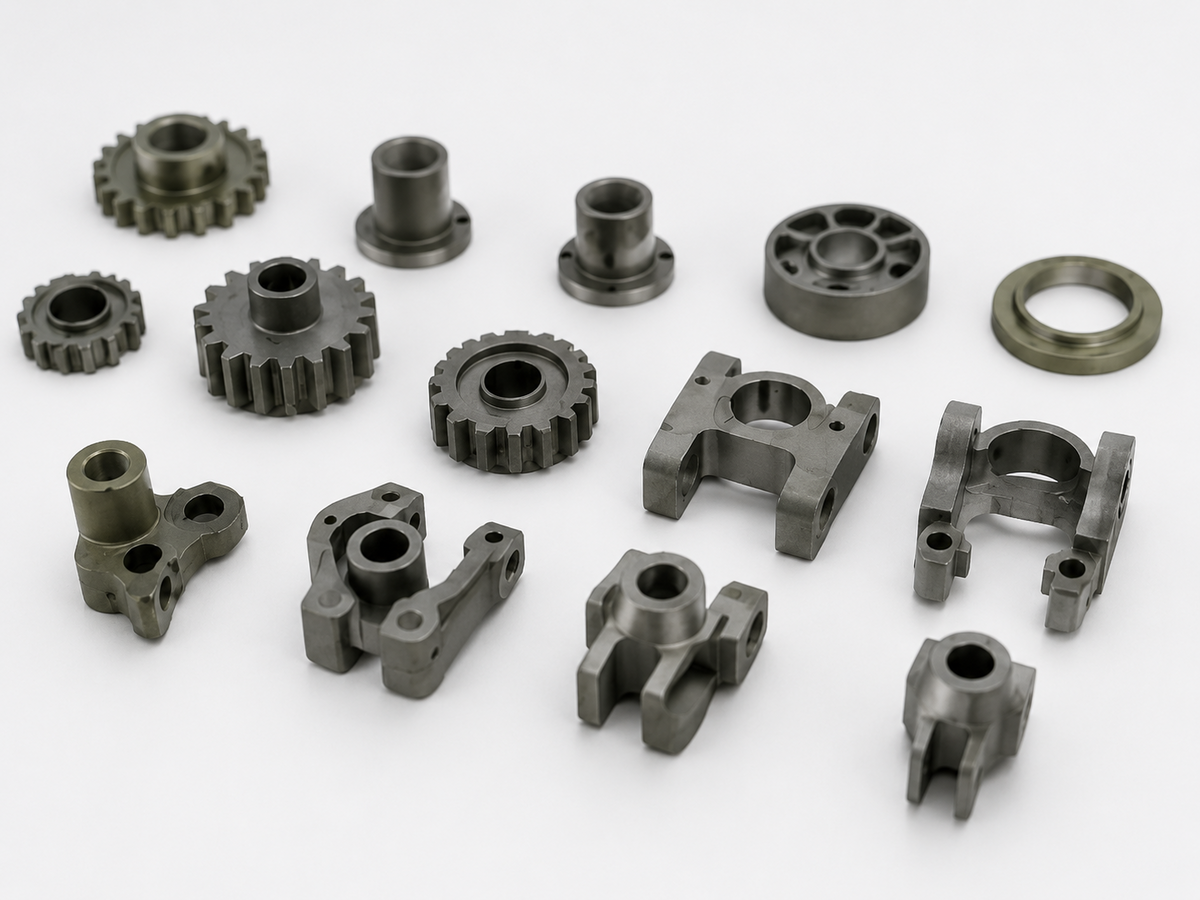
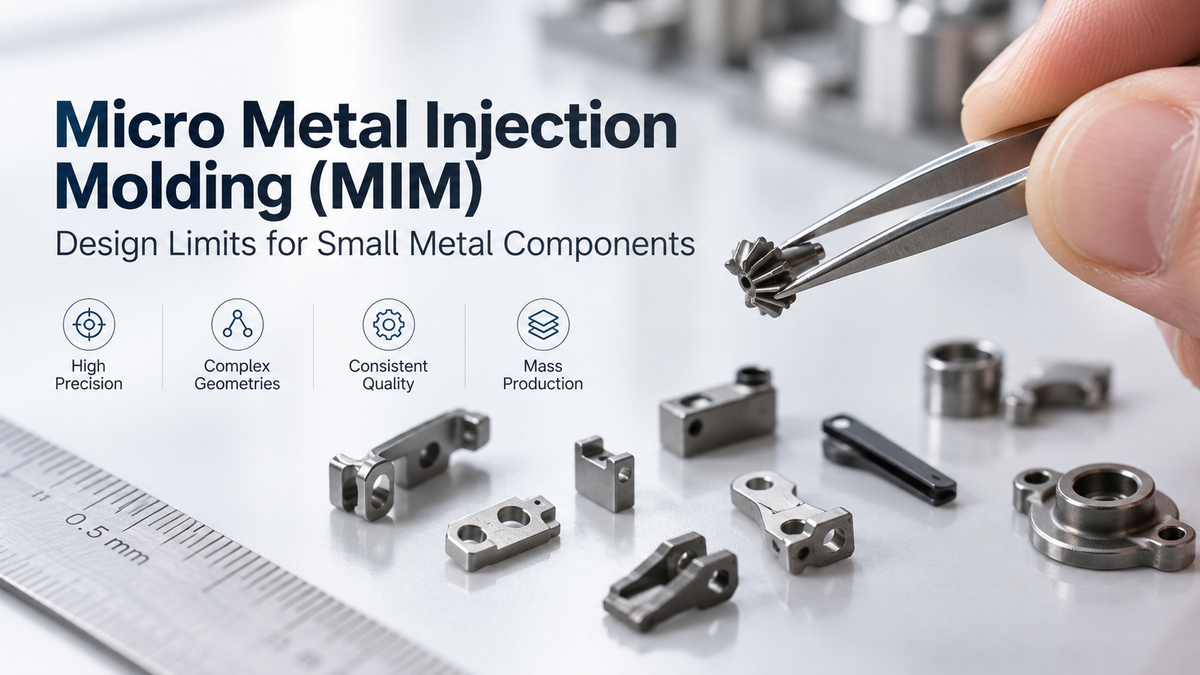
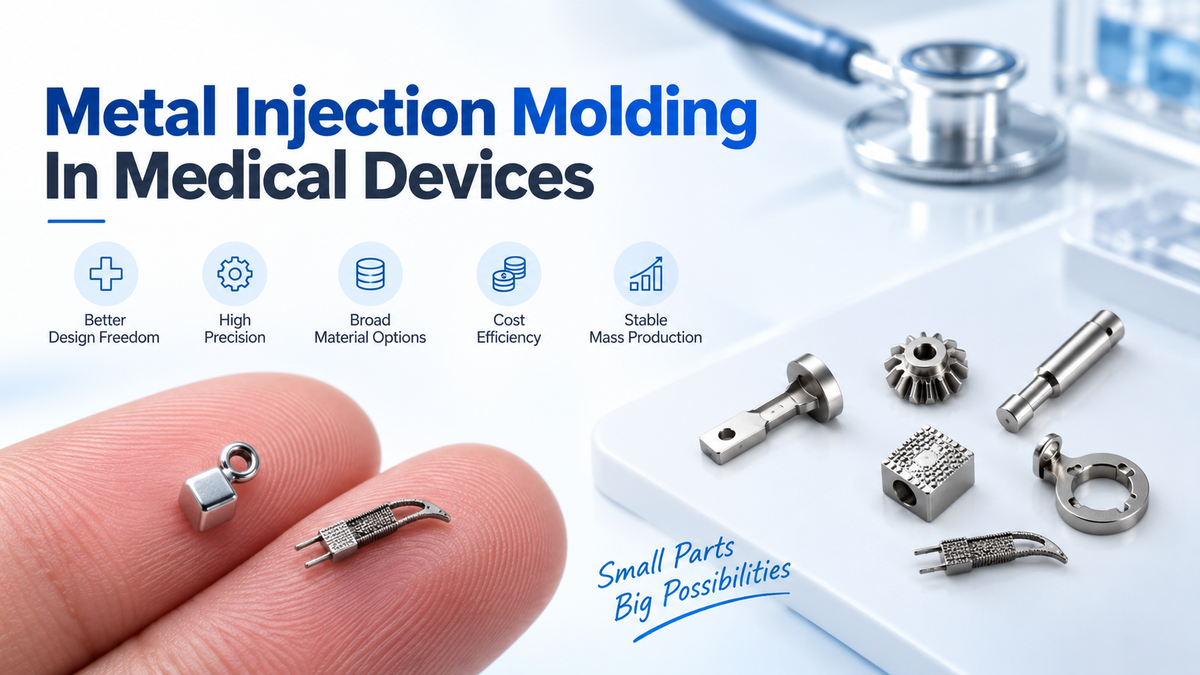
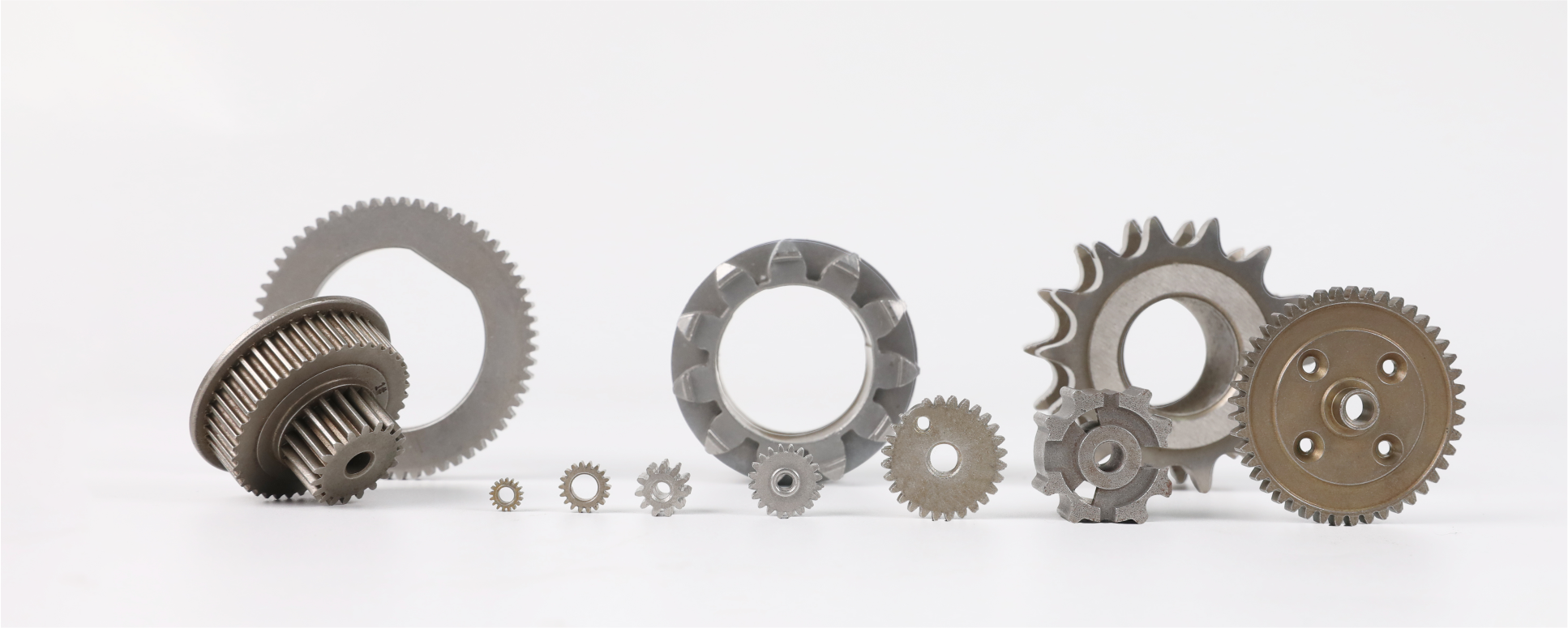
El micro MIM, por el contrario, está diseñado para piezas mucho más pequeñas con detalles mucho más finos. El componente general puede tener solo unos pocos milímetros de tamaño, mientras que las características críticas pueden incluir microagujeros, engranajes en miniatura, nervaduras delgadas, bordes afilados o estructuras internas extremadamente pequeñas. A esta escala, incluso una pequeña variación puede afectar significativamente la función de la pieza.
El desafío no es solo producir una pequeña pieza de metal, sino reproducir características muy pequeñas de manera consistente en la producción en masa. Eso es lo que separa al micro MIM del MIM estándar en términos de fabricación práctica.

Requisitos de precisión y consistencia dimensional
A medida que disminuye el tamaño de la pieza, el control dimensional se vuelve más exigente. Esta es una de las principales razones por las que el micro MIM se trata de manera diferente al MIM convencional.
En el MIM estándar, el comportamiento normal de contracción, la deformación menor o una ligera variación dimensional pueden permanecer dentro de un rango aceptable, según la aplicación.
En el micro MIM, sin embargo, la misma cantidad de variación puede volverse proporcionalmente mucho más grave. Un cambio dimensional que parece pequeño en el papel puede representar un error funcional importante en un microcomponente.
Esto es especialmente importante para piezas utilizadas en dispositivos médicos, ensamblajes micromecánicos, conectores en miniatura y productos electrónicos de precisión. En estas aplicaciones, la pieza puede necesitar encajar en un espacio muy limitado, interactuar con otras piezas en miniatura o mantener un perfil funcional estricto.
Como resultado, el micro MIM requiere una mayor consistencia dimensional no solo entre piezas, sino también entre lotes.
Por lo tanto, la precisión en el micro MIM no se trata solo de alcanzar una dimensión nominal. Se trata de mantener una repetibilidad estable durante todo el ciclo de producción.
Complejidad de las herramientas en el micro MIM
El herramental para micro MIM es significativamente más exigente que el herramental para MIM convencional.
En el MIM estándar, el diseño del molde ya requiere una cuidadosa atención al diseño de la entrada, las líneas de partición, la ventilación, la expulsión y la compensación dimensional para la contracción por sinterización.
En el micro MIM, todos estos problemas se vuelven más delicados porque la cavidad es mucho más pequeña y las características dentro de la herramienta son mucho más delicadas.
Las características a microescala son más difíciles de mecanizar en el molde, e incluso pequeñas imperfecciones en las herramientas pueden afectar la calidad del llenado o la expulsión de la pieza. La ventilación se vuelve más crítica porque el aire atrapado puede causar fácilmente un llenado incompleto en cavidades diminutas.
El diseño de la compuerta debe controlarse cuidadosamente para asegurar que la materia prima llegue a todas las características críticas sin crear estrés o desequilibrio excesivos. La eyección también debe manejarse con cuidado para evitar dañar piezas verdes frágiles.
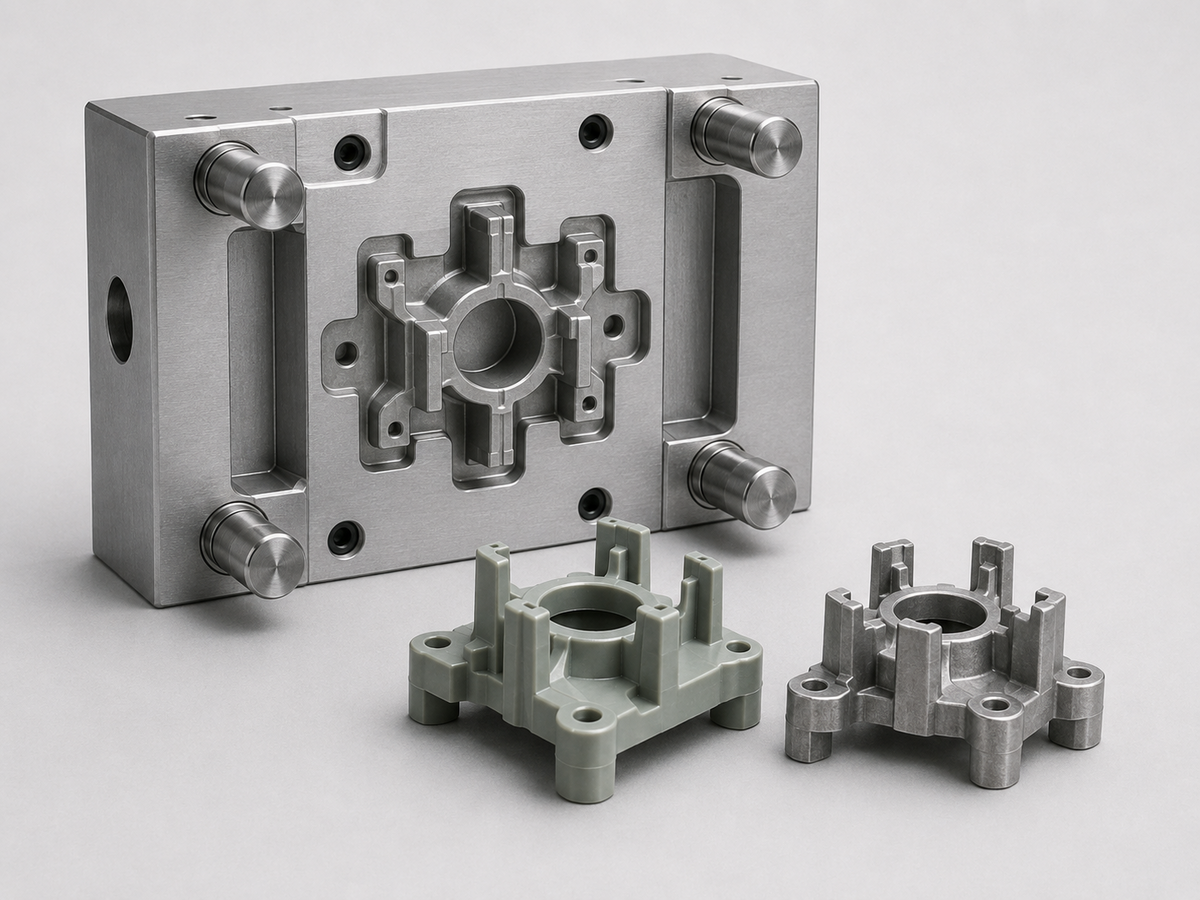
Por esta razón, el herramental de micro MIM no es solo una versión más pequeña de un molde MIM normal. Es una tarea de ingeniería más exigente que requiere un mayor control sobre la reproducción de detalles, la estabilidad y la vida útil del molde.
Control de materiales y materias primas
Tanto el MIM estándar como el micro MIM utilizan una materia prima hecha de polvo metálico fino y un sistema aglutinante. Sin embargo, el micro MIM generalmente exige un control más estricto sobre esta materia prima.
Debido a que las microcaracterísticas son más difíciles de llenar y más sensibles a la variación del proceso, las características del polvo, como el tamaño de partícula, la distribución de partículas y el comportamiento del flujo, se vuelven más importantes.
La materia prima debe fluir suavemente en secciones de molde muy pequeñas manteniendo la homogeneidad. Cualquier inestabilidad en la materia prima puede conducir a piezas incompletas, segregación, llenado incompleto o inconsistencia dimensional.
En el micro MIM, hay menos margen de error. Una materia prima que funciona adecuadamente para una pieza MIM estándar puede no funcionar bien cuando la geometría se vuelve mucho más pequeña y delicada.
La relación entre la carga de polvo, el contenido de aglutinante, las características de flujo y el comportamiento de desaglomerado debe equilibrarse con más cuidado.
Por eso, la selección de materiales en micro MIM no se trata solo de elegir un grado de metal. También se trata de asegurar que todo el sistema de materia prima pueda soportar la replicación precisa de características en miniatura.

Comportamiento de sinterización y riesgo de deformación
La sinterización es una etapa crítica en cualquier proceso MIM, pero su impacto suele ser más difícil de controlar en el micro MIM.
Durante la sinterización, la pieza se contrae y se densifica.
En el MIM convencional, el control de la contracción ya es un factor clave para lograr las dimensiones finales.
En el micro MIM, el efecto es aún más sensible porque las piezas son más pequeñas, más ligeras y a menudo más delgadas. Esto las hace más vulnerables a la distorsión, el movimiento de los bordes y la deriva dimensional.
Las paredes delgadas, los dientes finos, las proyecciones delicadas y las secciones transversales estrechas pueden responder de manera diferente durante el procesamiento térmico. Pequeños cambios en la condición de soporte, la geometría de la pieza, la carga del horno o la consistencia de la temperatura pueden influir en el resultado final. Dado que la pieza en sí es tan pequeña, incluso una ligera deformación puede causar la pérdida de función.
Como resultado, el micro MIM requiere un control de proceso más estricto no solo durante el moldeo, sino también durante el desaglomerado y la sinterización. Las condiciones estables del horno, la geometría de la pieza bien diseñada y la cuidadosa compensación de la contracción desempeñan un papel más importante.
Desafíos de inspección para microcomponentes
La inspección es otra área donde el micro MIM difiere claramente del MIM convencional.
Las piezas MIM estándar a menudo se pueden inspeccionar utilizando herramientas dimensionales comunes como calibradores, galgas, comparadores ópticos o sistemas CMM, según la geometría.
Para las piezas de micro MIM, sin embargo, la inspección se vuelve más difícil porque las características son más pequeñas, las tolerancias son más estrictas y la manipulación física es más sensible.
Puede ser difícil medir orificios muy finos, paredes delgadas, formas de engranajes en miniatura o características superficiales diminutas utilizando métodos normales. Pueden ser necesarios sistemas ópticos de mayor aumento, medición de visión de precisión, microfijación y técnicas de inspección especializadas. En algunos casos, simplemente sostener la pieza para la medición sin dañarla se convierte en un desafío.
Esto significa que el control de calidad en el micro MIM no solo es más estricto, sino también más exigente técnicamente. Una capacidad de inspección confiable es parte de la solución de fabricación, no solo un paso de verificación final.
Aplicaciones típicas de micro MIM vs MIM convencional
El rango de aplicación del micro MIM y el MIM convencional también refleja sus diferencias.
El MIM convencional se usa comúnmente para piezas pequeñas y complejas en industrias como la automotriz, la electrónica de consumo, el hardware, las herramientas, el equipo industrial y los sistemas mecánicos generales. Es adecuado para piezas que se benefician de la producción casi a la medida y la repetibilidad en grandes volúmenes.
El micro MIM se asocia más a menudo con industrias que requieren miniaturización y precisión al mismo tiempo. Estas incluyen dispositivos médicos, instrumentos mínimamente invasivos, electrónica de precisión, productos portátiles, microengranajes, conectores en miniatura y otros ensamblajes técnicos de alto valor.
En estas aplicaciones, la razón para usar micro MIM no es simplemente reducir el tamaño de la pieza. Es producir piezas metálicas en miniatura con una geometría compleja de una manera que siga siendo escalable para la producción. Esta combinación de tamaño pequeño, libertad de diseño y repetibilidad es lo que hace atractivo al micro MIM.
Diferencias de costos entre micro MIM y MIM estándar
Es fácil asumir que las piezas más pequeñas deberían costar menos porque utilizan menos material. En la práctica, eso no siempre es cierto.
Las piezas de micro MIM pueden consumir menos materia prima, pero a menudo requieren una mayor inversión en herramientas, desarrollo de procesos, control de calidad y estabilidad de producción.
La ventana de fabricación es más estrecha, el riesgo de defectos puede ser mayor y los requisitos de inspección son más avanzados. Todos estos factores pueden aumentar el costo por gramo o el costo de desarrollo por proyecto.
El MIM estándar suele ofrecer una fuerte ventaja de costo al reemplazar el mecanizado de piezas pequeñas y complejas en volúmenes medianos a altos. El micro MIM también puede ser rentable, pero su valor a menudo está más estrechamente ligado a la capacidad de miniaturización, la complejidad funcional y la escalabilidad de la producción que a un simple ahorro de material.
En otras palabras, el micro MIM suele ser más caro que el MIM estándar en función del peso unitario, pero aún así puede ser la mejor solución cuando la pieza no se puede producir de forma eficiente por otros métodos.

Conclusión
El micromoldeo por inyección de metal y el MIM convencional comparten la misma base de fabricación, pero no son intercambiables en la práctica. A medida que las piezas se vuelven más pequeñas y las características se vuelven más finas, el desafío de producción cambia significativamente.
El herramental se vuelve más delicado, el control de la materia prima se vuelve más crítico, la sinterización se vuelve más sensible, la inspección se vuelve más difícil y la consistencia dimensional se vuelve más exigente.
Por eso, el micro MIM se entiende mejor no como un MIM ordinario para piezas más pequeñas, sino como un proceso más especializado para fabricar componentes metálicos en miniatura y de alta precisión a escala.
Preguntas frecuentes
¿Es el micro MIM solo una versión más pequeña del MIM convencional?
No exactamente. El micro MIM se basa en el mismo proceso general que el MIM convencional, pero requiere un control mucho más estricto sobre las herramientas, el comportamiento de la materia prima, la contracción, la deformación y la inspección de calidad. En la producción real, es un enfoque de fabricación más especializado en lugar de simplemente una pieza MIM más pequeña.
¿Qué tipos de piezas son adecuadas para el micromoldeo por inyección de metal?
El micro MIM es adecuado para piezas metálicas en miniatura con formas complejas, detalles finos y necesidades de producción de alto volumen. Los ejemplos típicos incluyen microengranajes, conectores en miniatura, componentes de dispositivos médicos, piezas de dispositivos portátiles y otros pequeños componentes metálicos de precisión utilizados en industrias avanzadas.
¿Por qué la consistencia dimensional es más difícil en el micro MIM?
Debido a que las piezas son mucho más pequeñas, incluso una ligera variación dimensional se vuelve más crítica. Un cambio de tolerancia que puede ser aceptable en una pieza MIM más grande puede convertirse en un problema funcional en una micro pieza. Por esta razón, el micro MIM requiere un control más estricto sobre el moldeo, el desaglomerado, la sinterización y la inspección.
Compartir:
Piezas personalizadas de cerámica moldeadas por inyección: materiales, proceso y usos
Mecanizado de componentes médicos MIM para dispositivos de precisión