

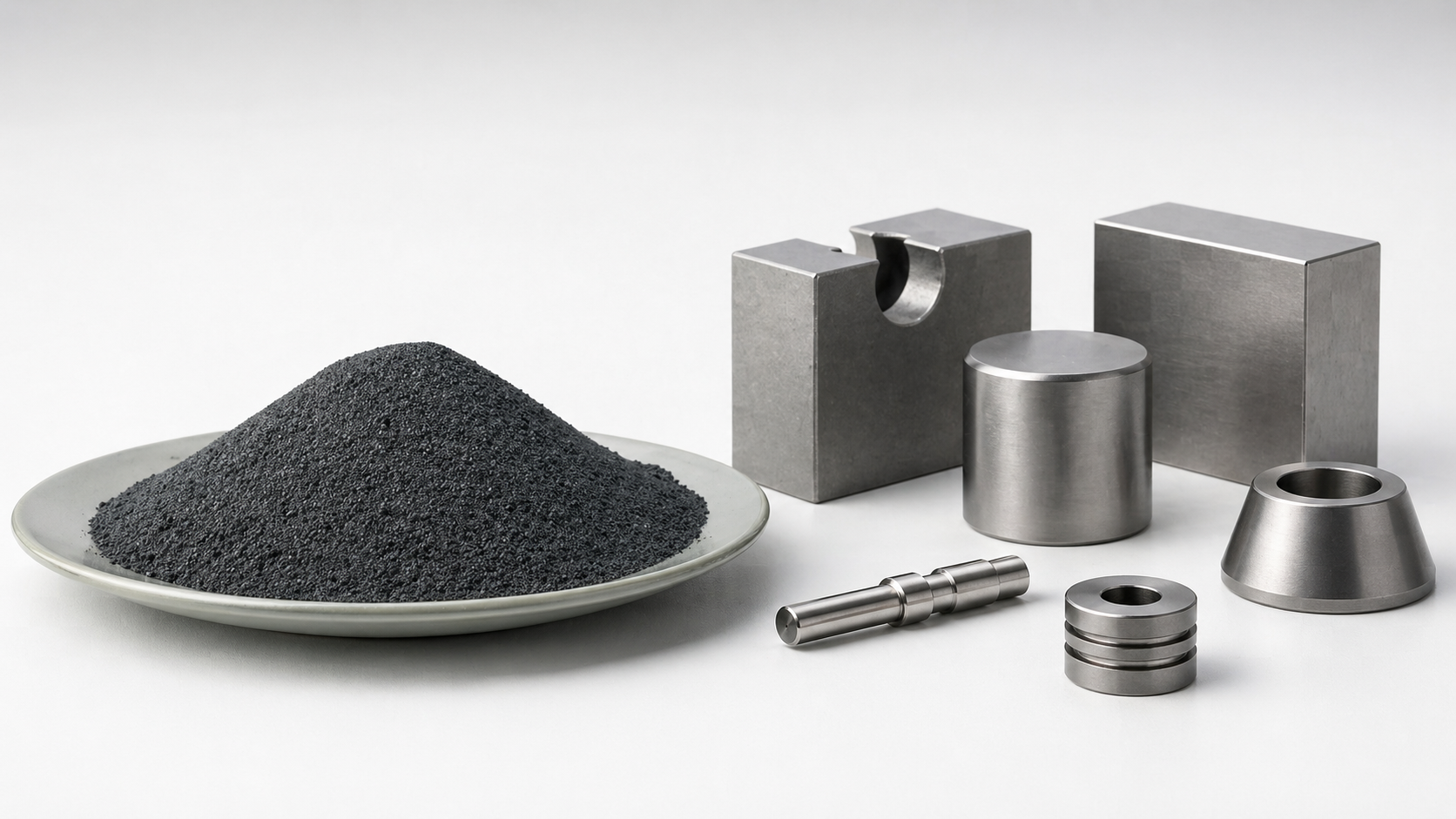
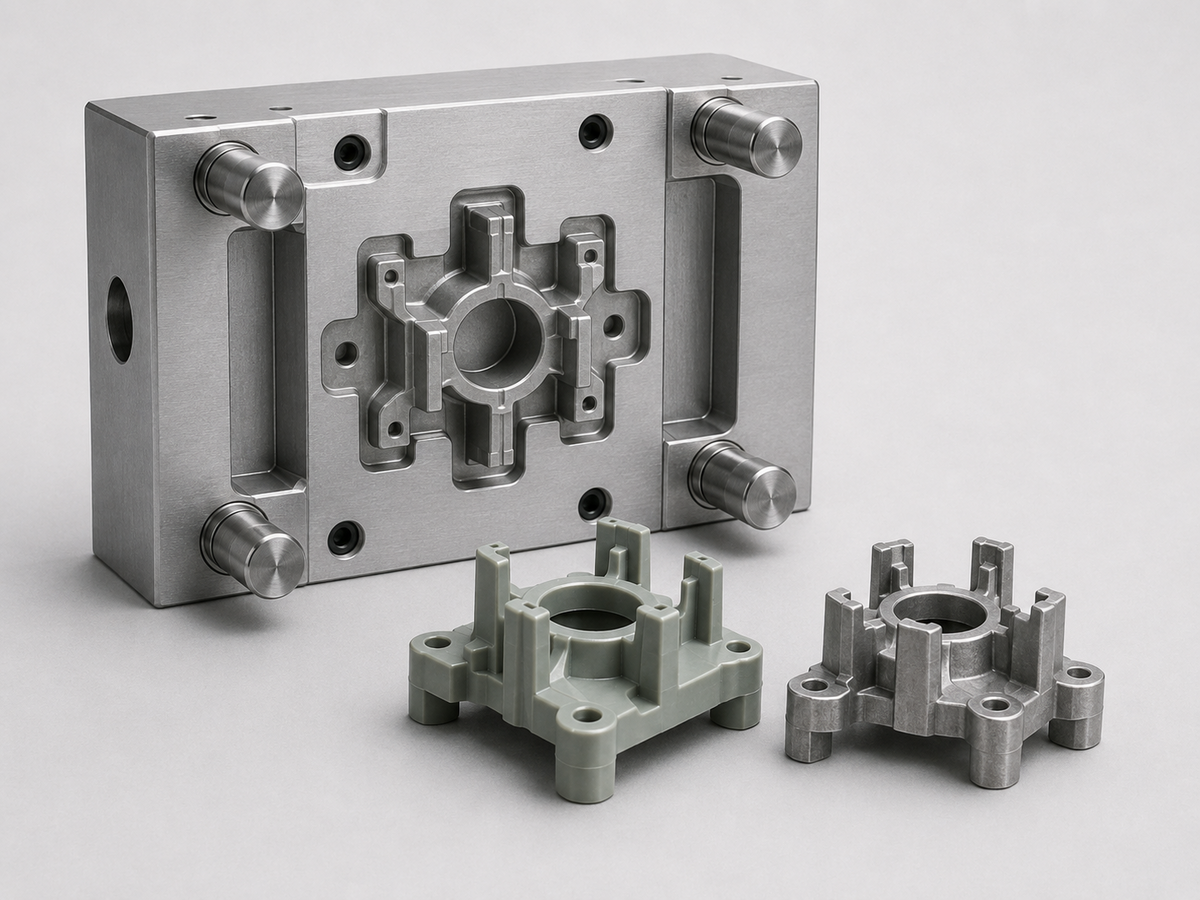
Powder metallurgy is a manufacturing process that uses metal powder, or a mixture of metal and non-metal powder, as raw material. Parts or materials are produced through compaction and sintering.
It is commonly used for components that are close to their final shape and for materials that are not easy to produce by conventional casting or machining.
Main Advantages of Powder Metallurgy
One clear advantage of powder metallurgy is high material utilization.
Because the compacted part is already close to the final shape, the amount of secondary machining is usually small.
Another advantage is that it can be used to produce materials that are difficult to make by conventional methods, such as refractory metals, pseudo-alloys, porous materials, and some functional materials.
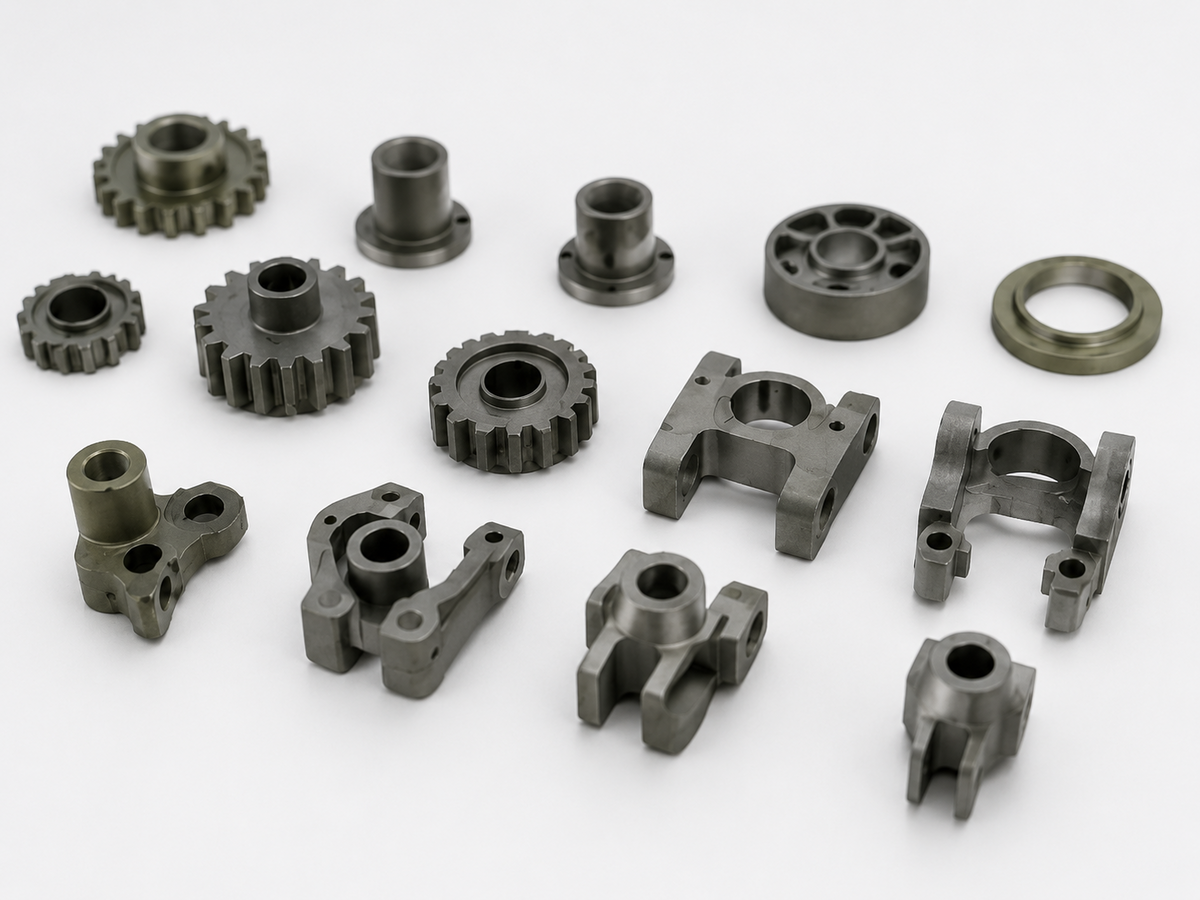
For parts like gears, powder metallurgy can also offer good cost control in mass production.
When the volume is large enough, it is often easier to reduce material waste and machining cost.
Limitations of Powder Metallurgy
Powder metallurgy also has its limitations.
The most common issue is that pores are difficult to eliminate completely.
Because of this, the density and mechanical properties of many powder metallurgy parts are usually lower than those of fully dense materials.
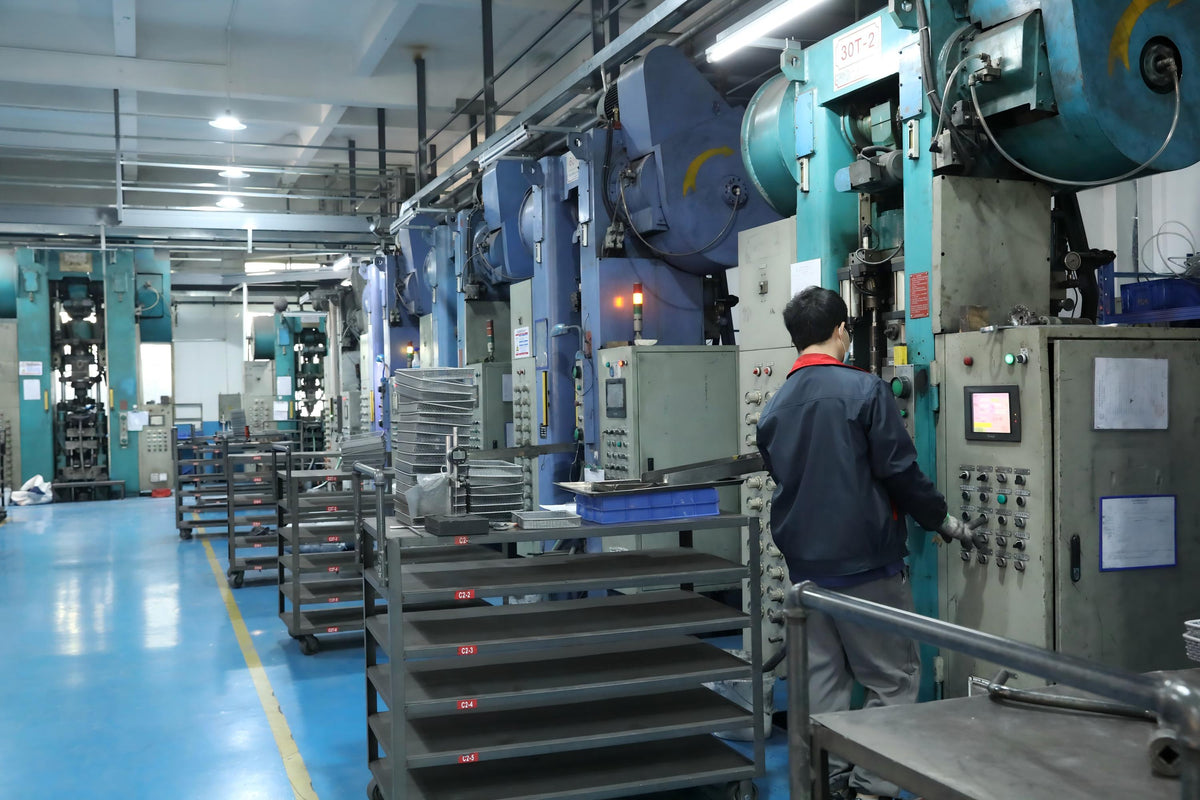
In addition, this process depends on molds and presses, so it is not ideal for very large parts or very small production volumes.

Why Powder Metallurgy Has High Material Utilization
The main reason is the compaction stage.
The pressed blank is usually already close to the final size and shape of the part.
That means less material needs to be removed later, so there is less waste.
For parts such as gears, traditional machining removes much more material.
Powder metallurgy is closer to near-net-shape forming, so it saves material more effectively.
Basic Process of Gas Atomization
Gas atomization can generally be divided into four stages.
First, the metal liquid stream is disturbed by high-speed gas.
Second, the liquid stream is stretched and broken into larger initial droplets.
Third, these droplets are further broken into smaller particles by the gas flow.
Finally, the droplets cool and solidify, and their shape gradually becomes more spherical.
This is one reason why gas atomization often produces powders with good sphericity.

What Affects Powder Particle Size in Atomization
Powder particle size in gas atomization is influenced by several factors:
- spray angle
- atomizing medium
- diameter of the metal stream
- temperature of the molten metal
- atomizing pressure
In general, stronger atomization, a thinner liquid stream, higher temperature, and lower melt viscosity tend to produce finer powder.
Why Blue Tungsten Is Used for Tungsten Powder Production
Blue tungsten is used mainly because it helps control particle growth.
In simple terms, it is more suitable for producing finer tungsten powder and for maintaining better particle size stability during reduction.
Its value is not that it is more complicated, but that it makes powder control easier.
Relationship Between Particle Size, Shape, and Bulk Density
Bulk density is the mass of powder per unit volume after the powder fills a container naturally.
It is closely related to particle size, particle size distribution, and particle shape.
In general, smaller particles create more friction between particles, which reduces flowability and often lowers bulk density.
Irregular particle shapes also create more voids during packing, which lowers bulk density.
However, if coarse and fine powders are combined in a suitable distribution, the fine particles can fill the gaps between the coarse particles, which may improve bulk density.
Why Specific Surface Area Can Be Used to Measure Particle Size
The specific surface area method is an indirect measurement method.
Because powder has a large surface area, it can adsorb gas.
By measuring the amount of gas adsorbed by a certain mass of powder, the specific surface area can be calculated.
Then the average particle size can be estimated from the relationship between surface area and particle size.
So this method measures surface area first and then converts it into particle size.
Difference Between Uniaxial Pressing and Isostatic Pressing
The main difference between these two methods is the stress state during forming.
In uniaxial pressing, pressure is applied mainly from one direction, so the density inside the compact is often uneven.
In isostatic pressing, pressure is applied from all directions, so the density is usually more uniform.
If density consistency is important, isostatic pressing usually has an advantage.
Why Tungsten Powder Particles Grow During Reduction
Tungsten powder is usually produced by reducing tungsten oxide with hydrogen.
If the process is not controlled well, the particles can grow too much.
The main reasons are:
- reduction temperature is too high
- time in the high-temperature zone is too long
- moisture in the atmosphere is too high
Higher temperature and longer holding time make particles coarser more easily.
Poor control of moisture can also increase particle growth.
So in tungsten powder production, it is not enough to simply complete the reduction.
Temperature, time, and atmosphere also need to be controlled carefully.
Conclusion
Powder metallurgy is not just a simple process of pressing and sintering.
Powder size, bulk density, forming method, and reduction conditions all affect the final result.
Understanding these basic points helps explain why a process works and helps reduce trial and error in actual production.



Share:
Why Engineers Are Replacing Metal Parts With Zirconia Ceramic Components
Dental Sintering Furnace for Reliable Zirconia Sintering