

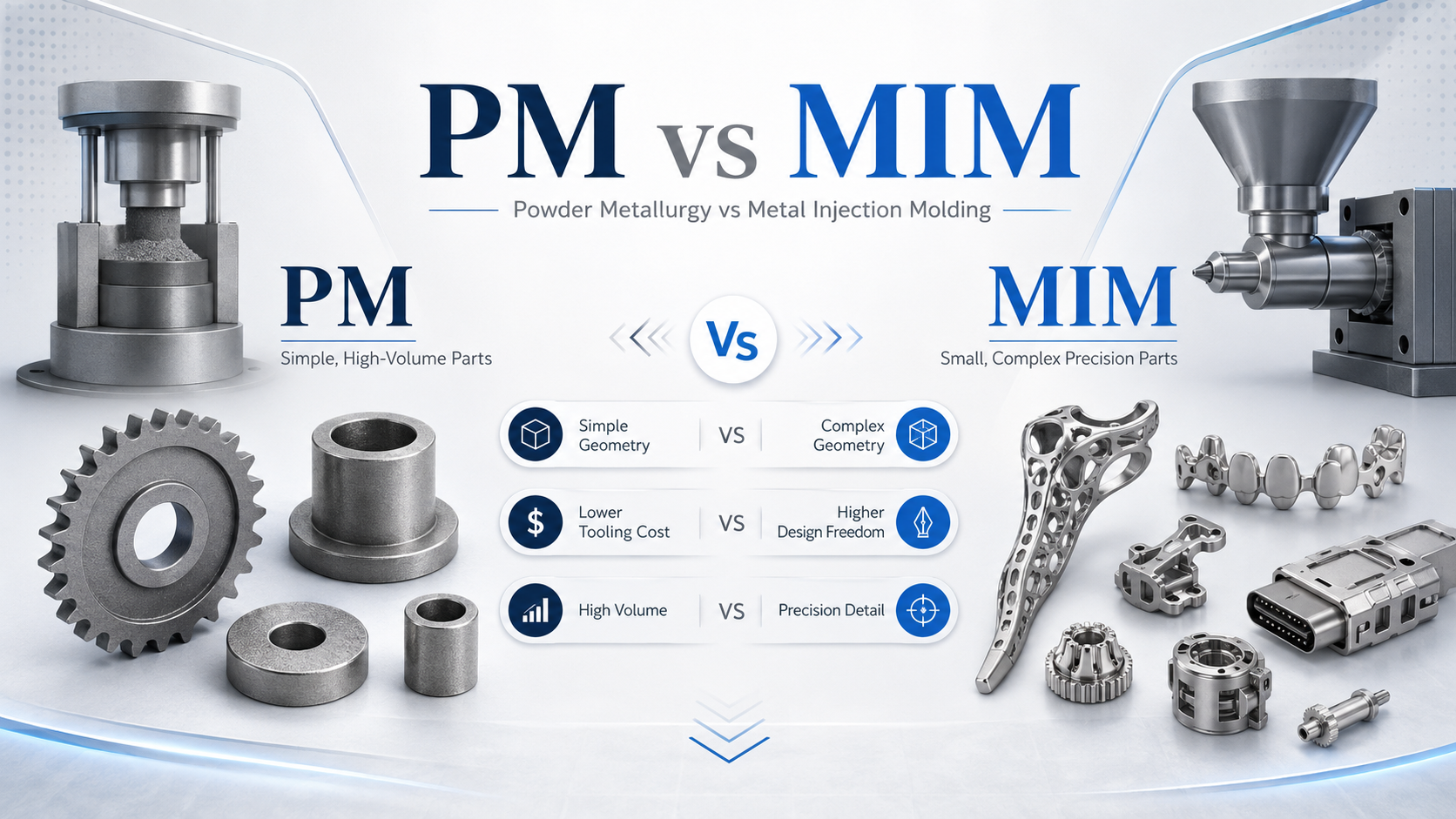
When a metal part becomes smaller and more complex, traditional powder metallurgy may start to show its limits.
A simple PM part can be cost-effective. But when the design includes thin walls, side holes, small grooves, complex curves, or tight dimensional requirements, the process may need extra machining. This can increase cost, lead time, and quality risk.
This is where metal injection molding, or MIM, becomes a strong alternative.
With over 15 years of experience in precision metal manufacturing, XY-GLOBAL has worked with customers on MIM, powder metallurgy, and other custom metal part projects in medical, optical, automotive, electronics, and precision hardware industries.
This article compares MIM and PM from a practical manufacturing point of view. It explains how the two processes work, where their limits are, how cost should be evaluated, and when MIM can be a better option for small, complex, and high-precision metal components.
What Is Traditional Powder Metallurgy?
Traditional powder metallurgy, also called PM, is a metal forming process. In this process, metal powder is pressed into a mold under high pressure. Then the part is sintered at high temperature to become stronger.
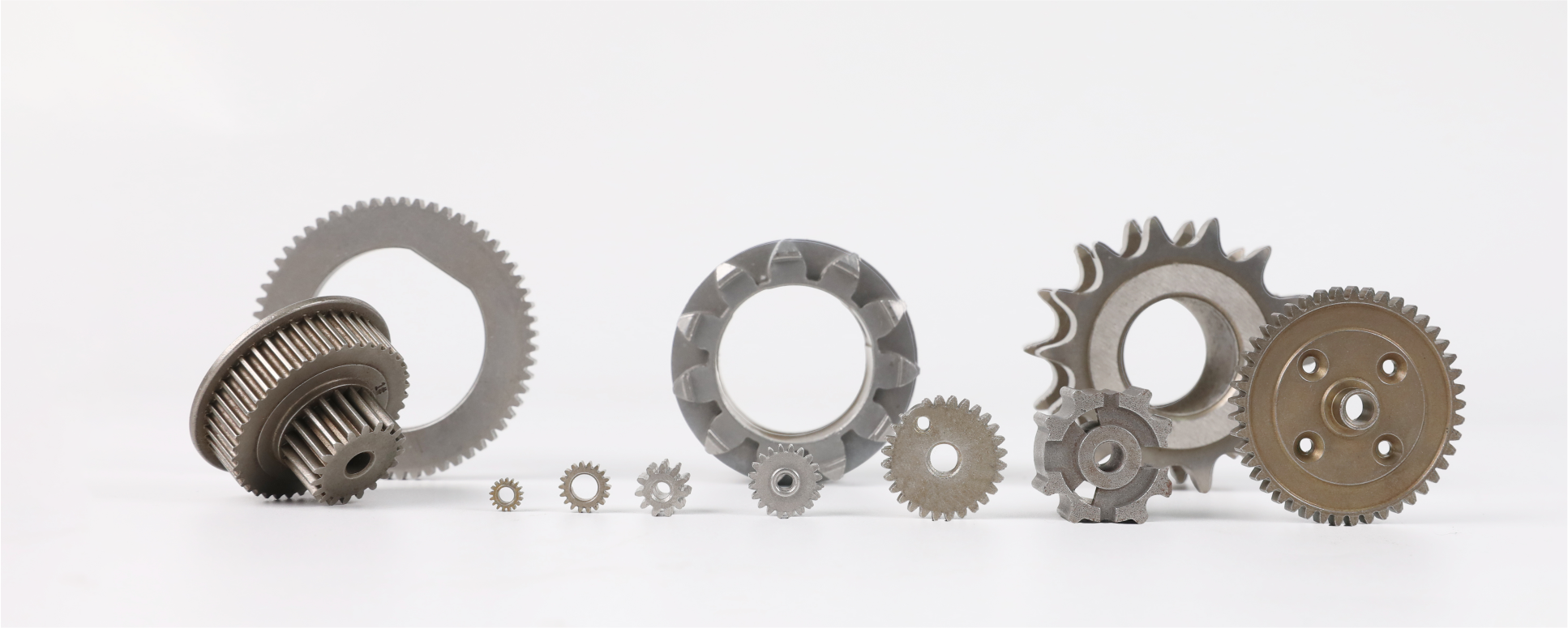
 Powder metallurgy is widely used because it can produce large quantities of metal parts with less material waste. It is often used for parts with simple shapes for economical and efficient manufacturing. Common power metallurgy machined parts include gears, bushings, bearings, spacers, filters, and simple structural parts.
But PM also has clear limits. Since the powder is pressed mainly from one direction, the part shape is limited by the pressing process. Simple shapes are easy to make, but complex three-dimensional features can be difficult. Side holes, undercuts, thin walls, deep grooves, and fine details usually require extra machining or design changes.
Because of this, PM is more suitable for parts with basic shapes and relatively simple geometry.
What Is Metal Injection Molding?
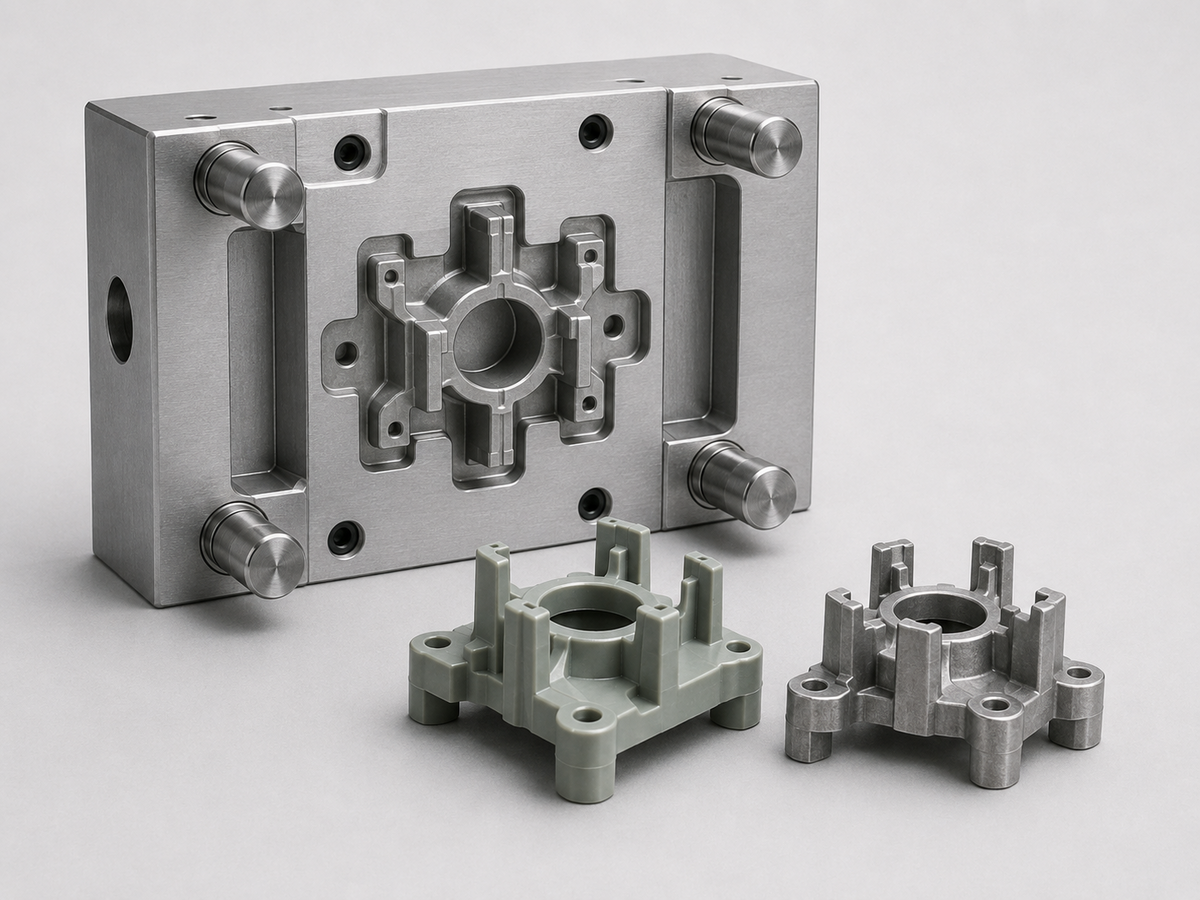
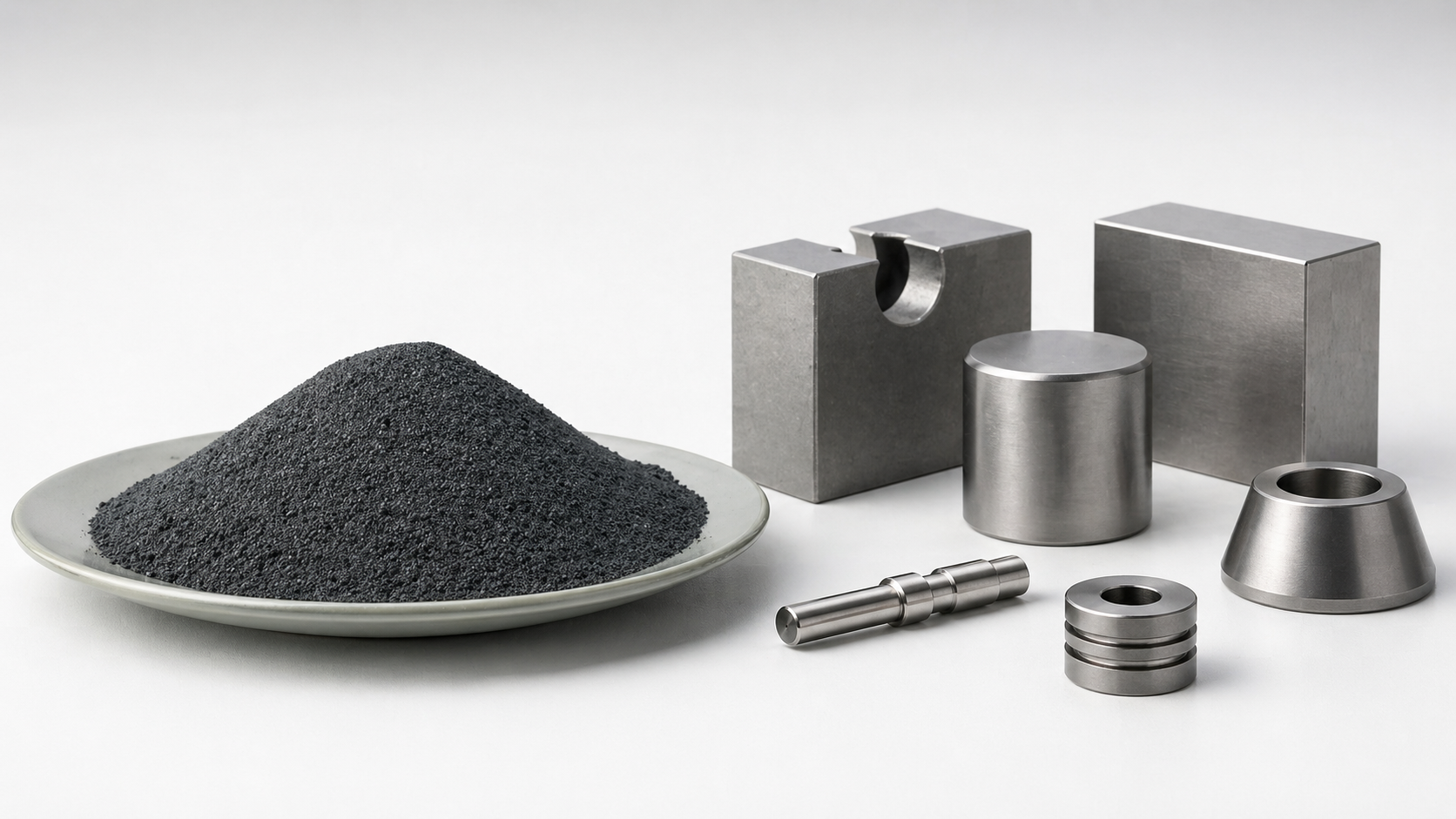
Metal injection molding (MIM) is a process that combines fine metal powder with a binder system. The mixed material is called feedstock. This feedstock can flow into a mold cavity, similar to plastic injection molding.
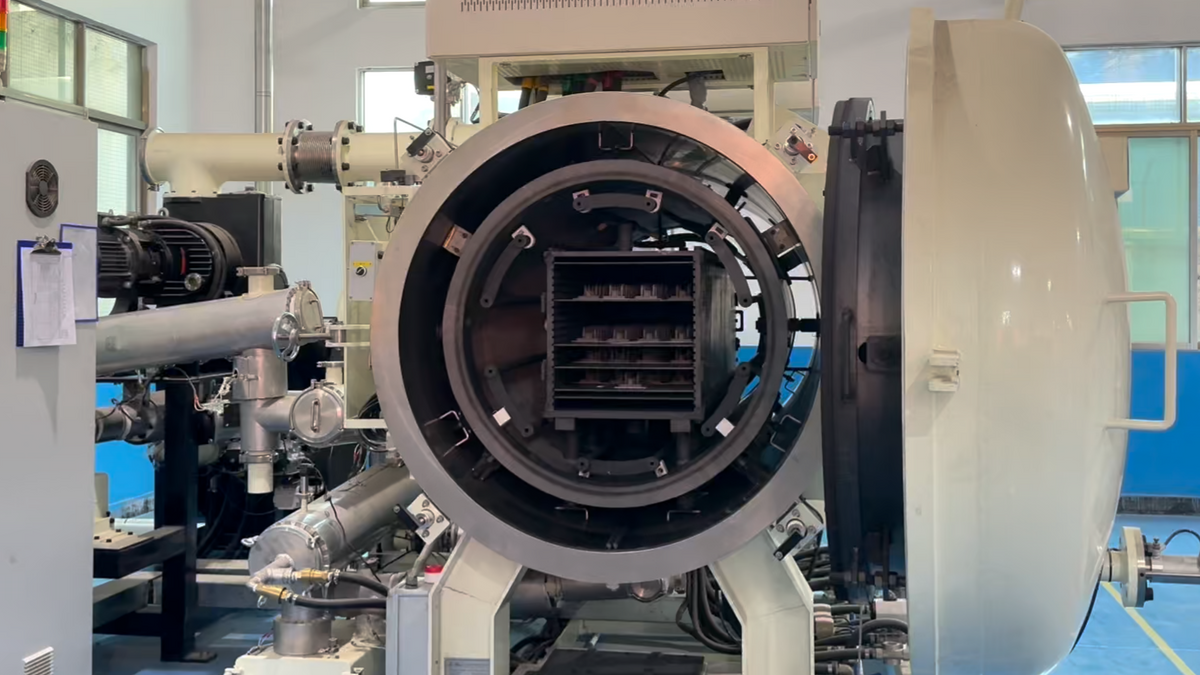
After molding, the part goes through debinding and sintering. During these steps, the binder is removed, and the metal powder becomes a solid metal part.

The main advantage of MIM is design freedom. Because the feedstock is injected into the mold, MIM can form more complex shapes than traditional powder pressing. It is especially suitable for small parts with fine features, curved surfaces, thin walls, and integrated structures.
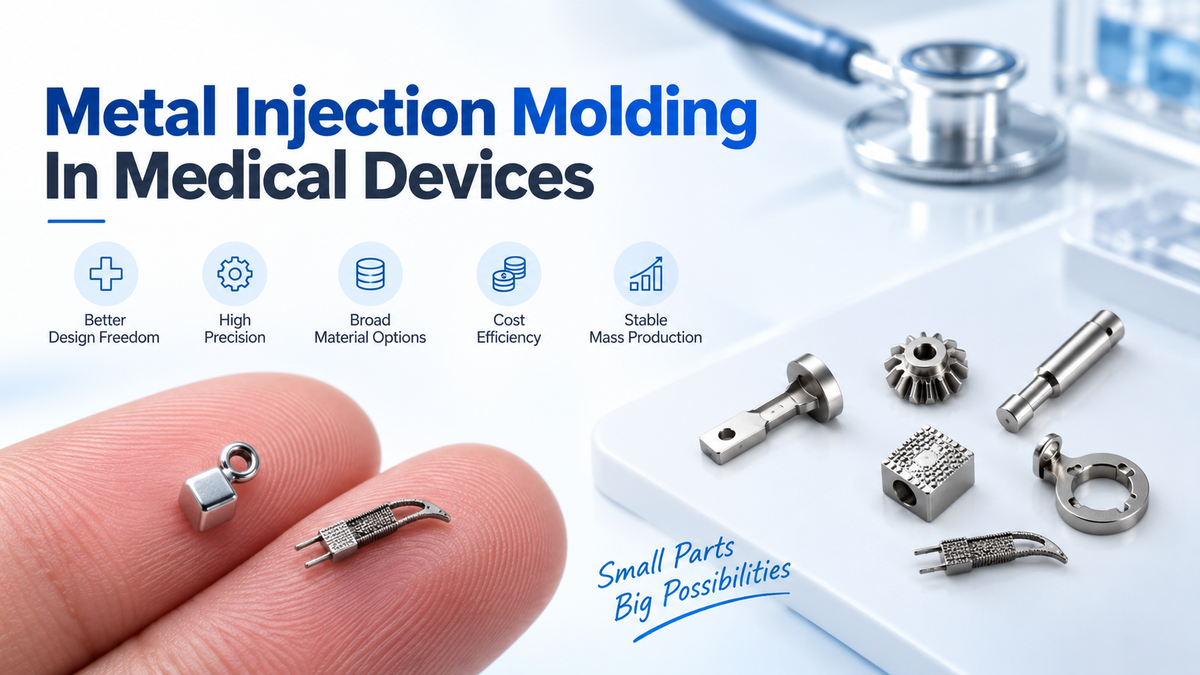
This makes metal injection molding a good option for medical device parts, dental components, electronic hardware, automotive precision parts, watch parts, tool components, and micro metal parts.

Why Metal Injection Molding Can Be Better for Complex Metal Parts
MIM Can Make More Complex Shapes
MIM Can Reduce Secondary Machining
This adds more production steps. It also increases lead time and process variation.
MIM can often form many features directly in the mold. This does not mean every metal injection molded part needs no post-processing. Some parts may still require machining, polishing, heat treatment, or surface treatment.
However, compared with PM, MIM can often reduce the amount of secondary machining required. For high-volume production, this can improve both cost efficiency and quality consistency.
MIM Is Better for Small Precision Parts
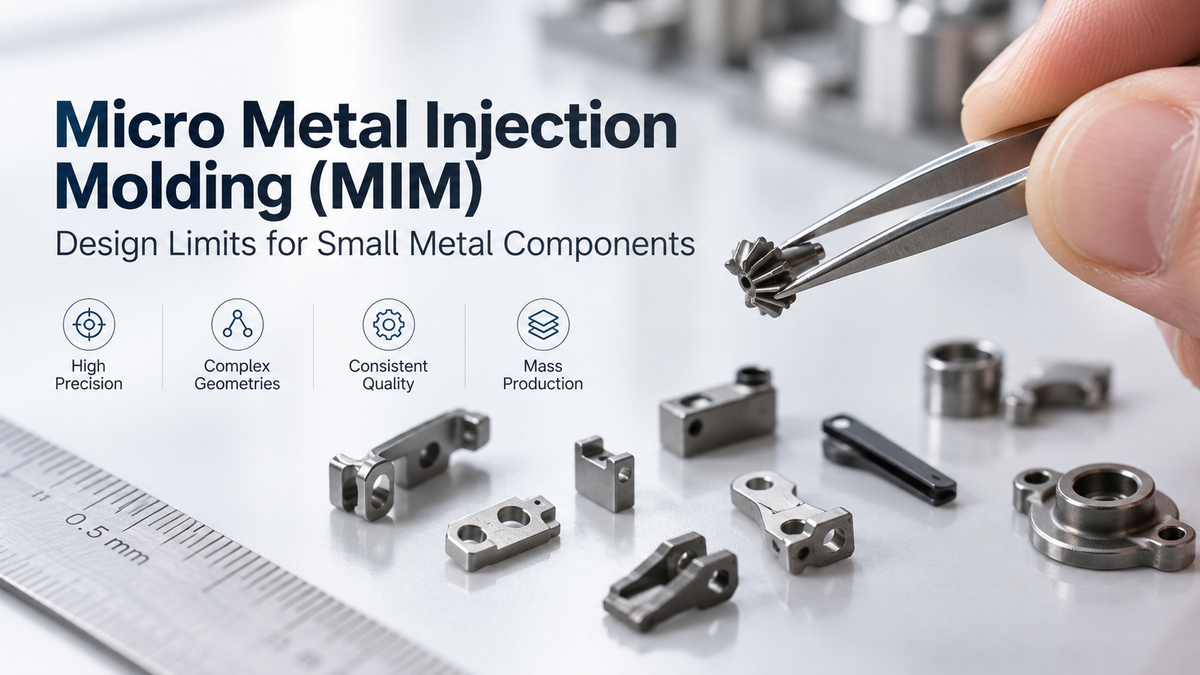
Metal injection molding is especially useful for small metal parts. When a part is very small, CNC machining can become slow and expensive. Traditional PM may also have difficulty making fine features.
MIM can produce small parts with complex shapes in large quantities. This is why it is widely used in industries such as:
- medical devices
- dental products
- electronics
- automotive
- tools
- consumer products
- precision mechanical assemblies
For small and complex parts, MIM can offer a good balance between cost, precision, and production efficiency.
MIM Can Achieve Higher Density
Many MIM parts can achieve higher density than conventional PM parts after sintering.
Higher density usually means better strength, better wear resistance, and better corrosion resistance. This is important for parts that must be small but still strong.
For example, medical device parts, dental components, and precision mechanical parts often need good mechanical performance. In these cases, MIM can be more suitable than traditional PM.
Of course, the final performance depends on the material, part design, sintering process, and quality control. But in many precision applications, MIM can provide stronger overall performance.
MIM Gives Better Surface Detail
MIM can produce fine surface details and cleaner shapes.
This is useful when the part has small features or needs a better appearance. For some products, the part is not only functional but also visible. A better surface can reduce extra finishing work.
MIM is often used when the part needs:
- fine details
- smooth surfaces
- small features
- clean edges
- near-net-shape production
This is another reason why MIM is replacing PM in some high-precision applications.
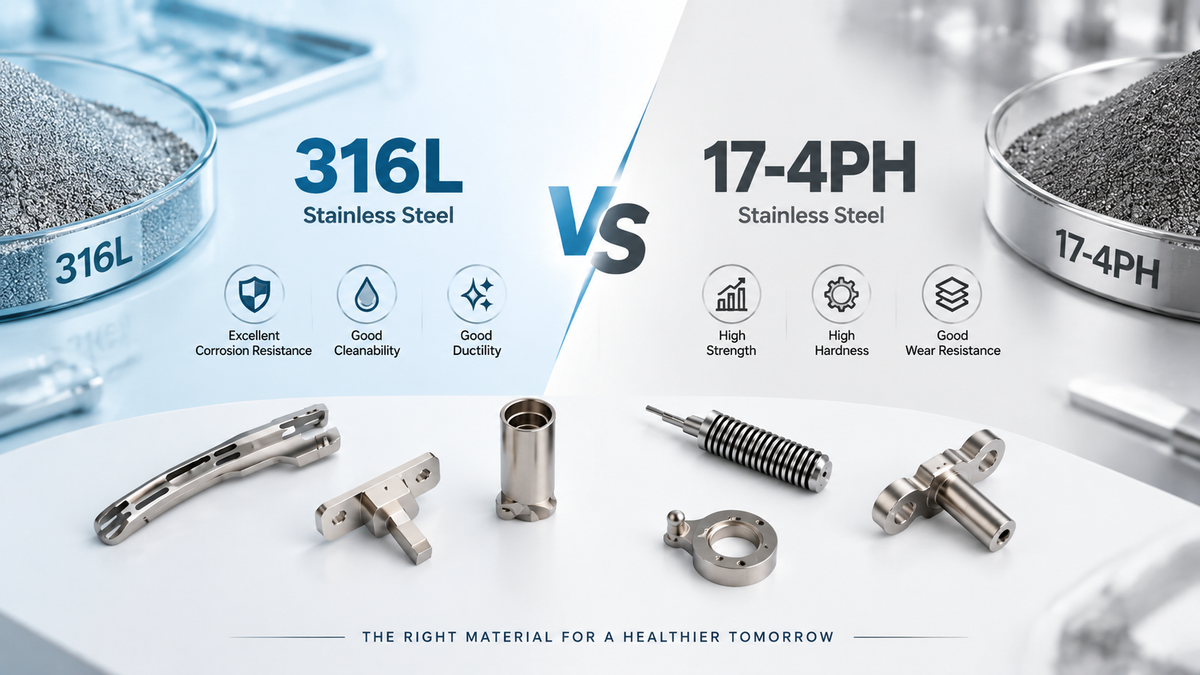
Common Materials Used in Metal Injection Molding
Typical Applications Where MIM Can Replace PM
Medical Device Components
Dental Components
Electronic Parts
Precision Automotive Parts
Micro Metal Components
When Powder Metallurgy Is Still the Better Choice
MIM is replacing traditional PM in small, complex, and high-precision metal part applications.
When MIM May Not Be the Right Choice
Final Thoughts
FAQ
The main difference is the forming method. PM uses powder pressing, while MIM uses injection molding. Because of this, MIM can produce more complex shapes and finer details than traditional PM.
2. Is MIM more expensive than PM?
MIM tooling cost is usually higher. However, for small and complex parts, MIM may reduce secondary machining and assembly cost. In medium to high-volume production, the total cost can be competitive.
3. Is MIM suitable for titanium parts?
Yes, titanium MIM can be used for small and complex titanium parts. It is often considered for medical, dental, aerospace, and high-performance applications. However, titanium MIM requires strict process control because titanium is sensitive to contamination during processing.
4. What materials can be used in MIM?
Common MIM materials include stainless steel, low-alloy steel, tool steel, titanium alloy, copper alloy, tungsten alloy, and other specialty metals. The best material depends on the application and performance requirements.
5. What industries use MIM?
MIM is used in medical devices, dental products, electronics, automotive parts, tools, consumer products, and precision mechanical components.
Share:
An Overview of Tungsten Powder Metallurgy
Powder Metal Manufacturing: Process, Materials, Benefits, and Custom PM Parts