

Cuando una pieza de metal conduce demasiado calor o electricidad, o cuando una pieza de plástico no puede soportar el desgaste, la temperatura o la estabilidad dimensional, las piezas cerámicas personalizadas pueden ser una mejor solución.
En XY-GLOBAL, ofrecemos piezas estructurales de cerámica personalizadas para clientes que necesitan más que tubos, placas o arandelas de cerámica estándar. Muchos de nuestros proyectos cerámicos se utilizan dentro de conjuntos, como sensores, dispositivos médicos, equipos electrónicos, sistemas ópticos, dispositivos de automatización y accesorios de alta temperatura. Estas piezas pueden parecer pequeñas, pero a menudo cumplen una función importante: aislamiento, resistencia al desgaste, estabilidad térmica, posicionamiento o protección.
Nuestras piezas cerámicas pueden producirse mediante mecanizado de cerámica, rectificado, pulido y moldeo por inyección de cerámica, también conocido como CIM. El proceso correcto depende del tamaño, la forma, la tolerancia, la cantidad y el material de la pieza.

Materiales cerámicos que podemos soportar
Diferentes materiales cerámicos son adecuados para diferentes condiciones de trabajo. Por ejemplo, la alúmina se utiliza a menudo para el aislamiento y la resistencia general al desgaste, mientras que la circonia es más adecuada cuando se requiere una mayor tenacidad y una superficie más lisa.
| Material cerámico | Características principales | Aplicaciones comunes |
|---|---|---|
| Cerámica de alúmina | Aislamiento eléctrico, resistencia al desgaste, resistencia al calor, rentable | Aisladores, espaciadores, manguitos, piezas de sensores |
| Cerámica de circonia | Mayor tenacidad, buen acabado superficial, fuerte resistencia al desgaste | Manguitos de precisión, piezas estructurales pequeñas, componentes relacionados con la medicina |
| Cerámica de nitruro de aluminio | Alta conductividad térmica con aislamiento eléctrico | Piezas de disipación de calor, componentes electrónicos |
| Cerámica de nitruro de silicio | Alta resistencia, resistencia al desgaste, resistencia al choque térmico | Piezas de desgaste mecánico, rodillos, piezas guía |
| Cerámica de carburo de silicio | Muy alta dureza, resistencia a la corrosión, estabilidad a altas temperaturas | Boquillas, piezas de desgaste, componentes para entornos agresivos |
| Cerámica de cordierita | Baja expansión térmica, buena resistencia al choque térmico | Piezas de sonda de temperatura, accesorios de calentamiento, piezas de ciclismo térmico |
Para muchas solicitudes de cotización, los clientes no están completamente seguros de qué material cerámico elegir. En ese caso, generalmente revisamos la temperatura de trabajo, el requisito de aislamiento, la condición de desgaste, el método de montaje y la cantidad antes de recomendar un material.
¿Qué tipos de piezas cerámicas personalizadas podemos fabricar?
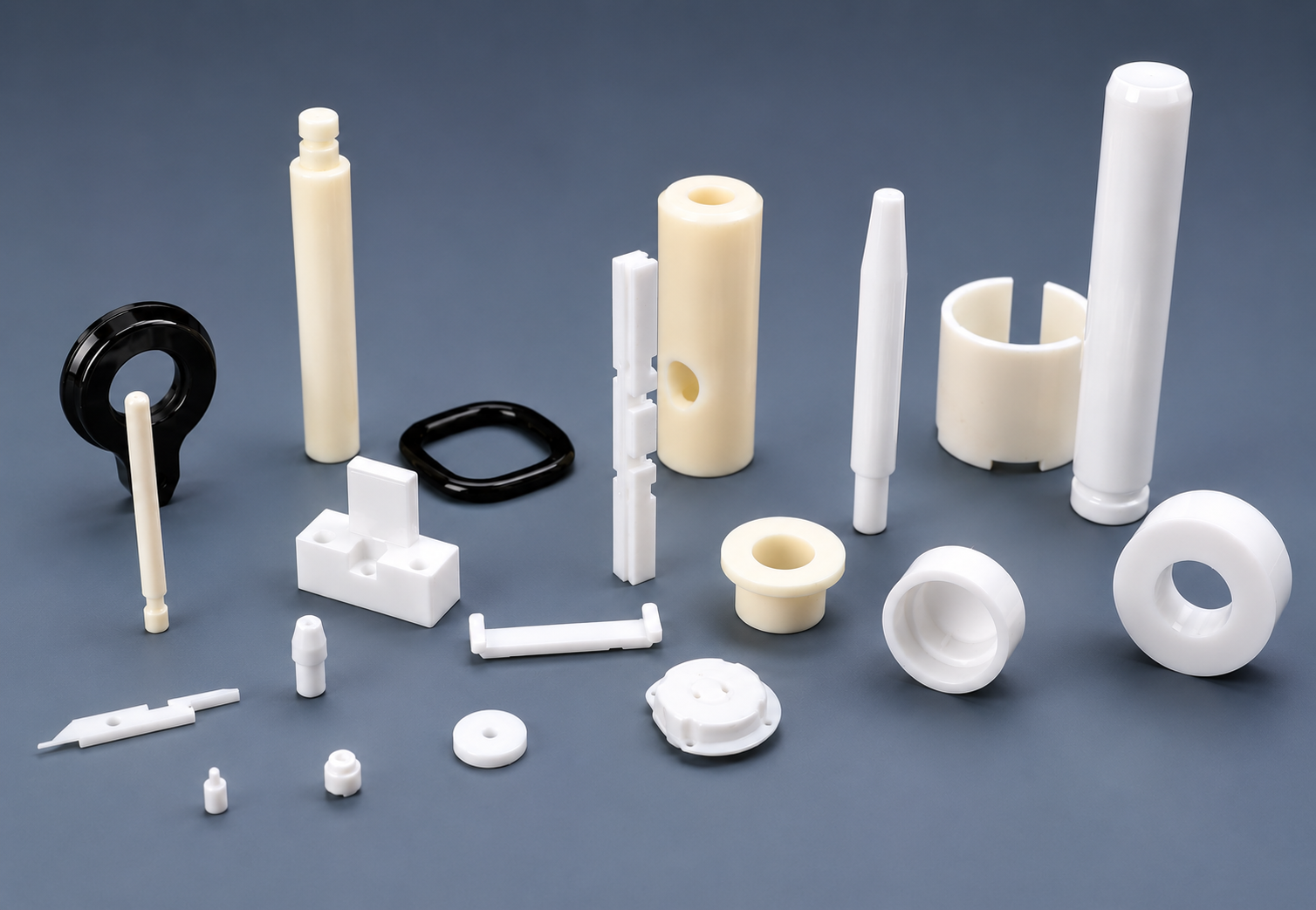
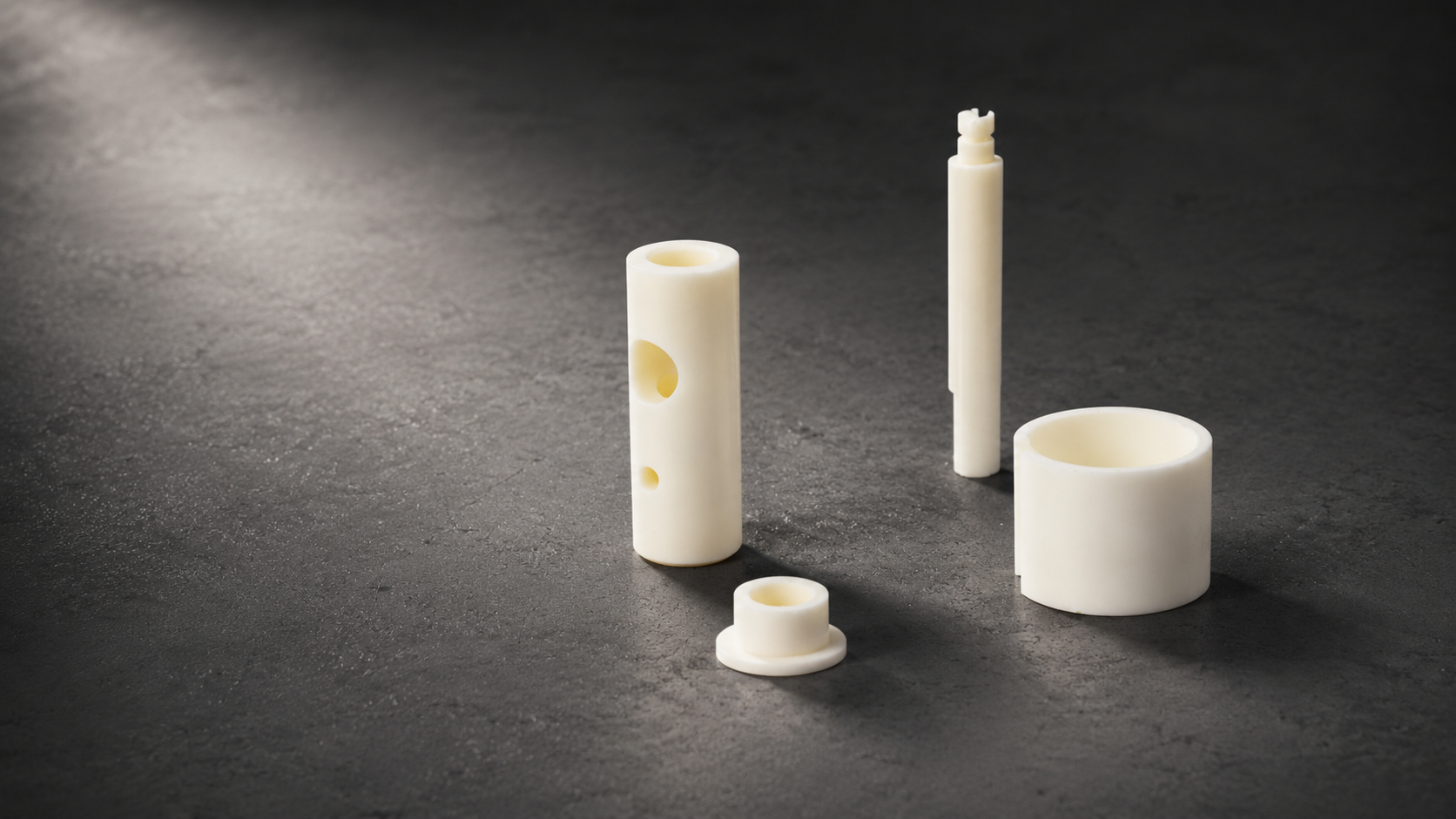
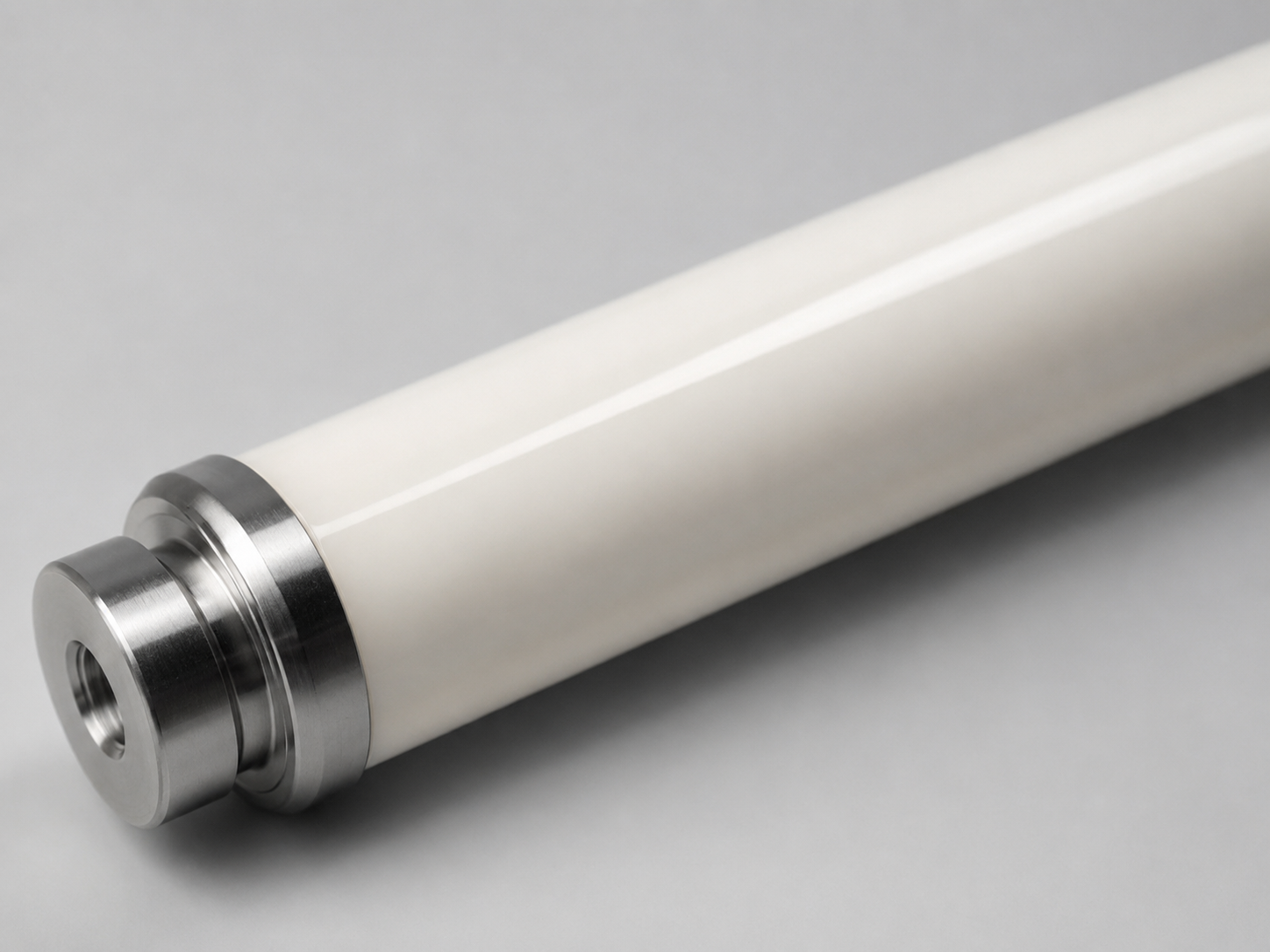
Nos centramos principalmente en componentes estructurales cerámicos de precisión, no en cerámicas comerciales simples. Las piezas típicas incluyen espaciadores cerámicos, manguitos aislantes, bujes, pasadores, boquillas, piezas de sonda, carcasas, guías, rodillos, accesorios y piezas cerámicas CIM pequeñas.
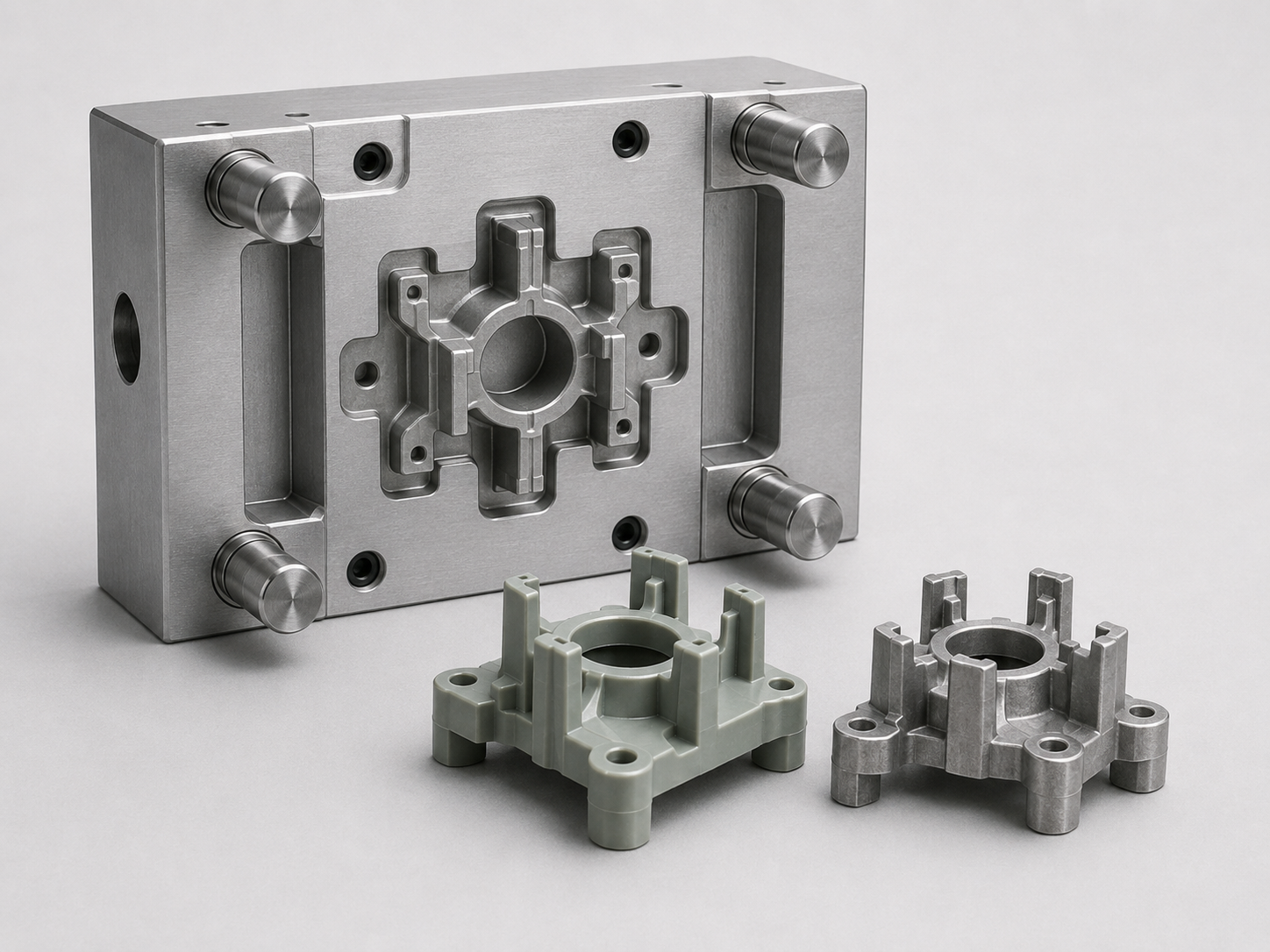
Para prototipos o proyectos de bajo volumen, el mecanizado de cerámica a partir de piezas en bruto suele ser más flexible. Para piezas pequeñas y complejas con una demanda de lote estable, el CIM puede ser más adecuado porque puede formar geometrías complejas de manera más eficiente una vez que se completa el utillaje.
Para dimensiones críticas, puede ser necesario un rectificado secundario o un mecanizado de precisión después del sinterizado. Esto es común para orificios, diámetros exteriores, superficies planas, caras de montaje y áreas de sellado o deslizamiento.
Como referencia, las características cerámicas mecanizadas o rectificadas a menudo pueden alcanzar tolerancias estrechas como ±0,005 mm a ±0,02 mm, según la geometría, el tamaño y el material. Para características locales muy críticas, se puede discutir un control más estricto después de la revisión del dibujo. El acabado superficial también se puede mejorar mediante rectificado o pulido cuando la pieza requiere contacto suave, deslizamiento, sellado o calidad visual.
La capacidad exacta siempre debe confirmarse en función del dibujo, porque las piezas cerámicas se ven afectadas por el grosor de la pared, la profundidad del orificio, el diseño del borde, la contracción y el riesgo de astillado o agrietamiento.
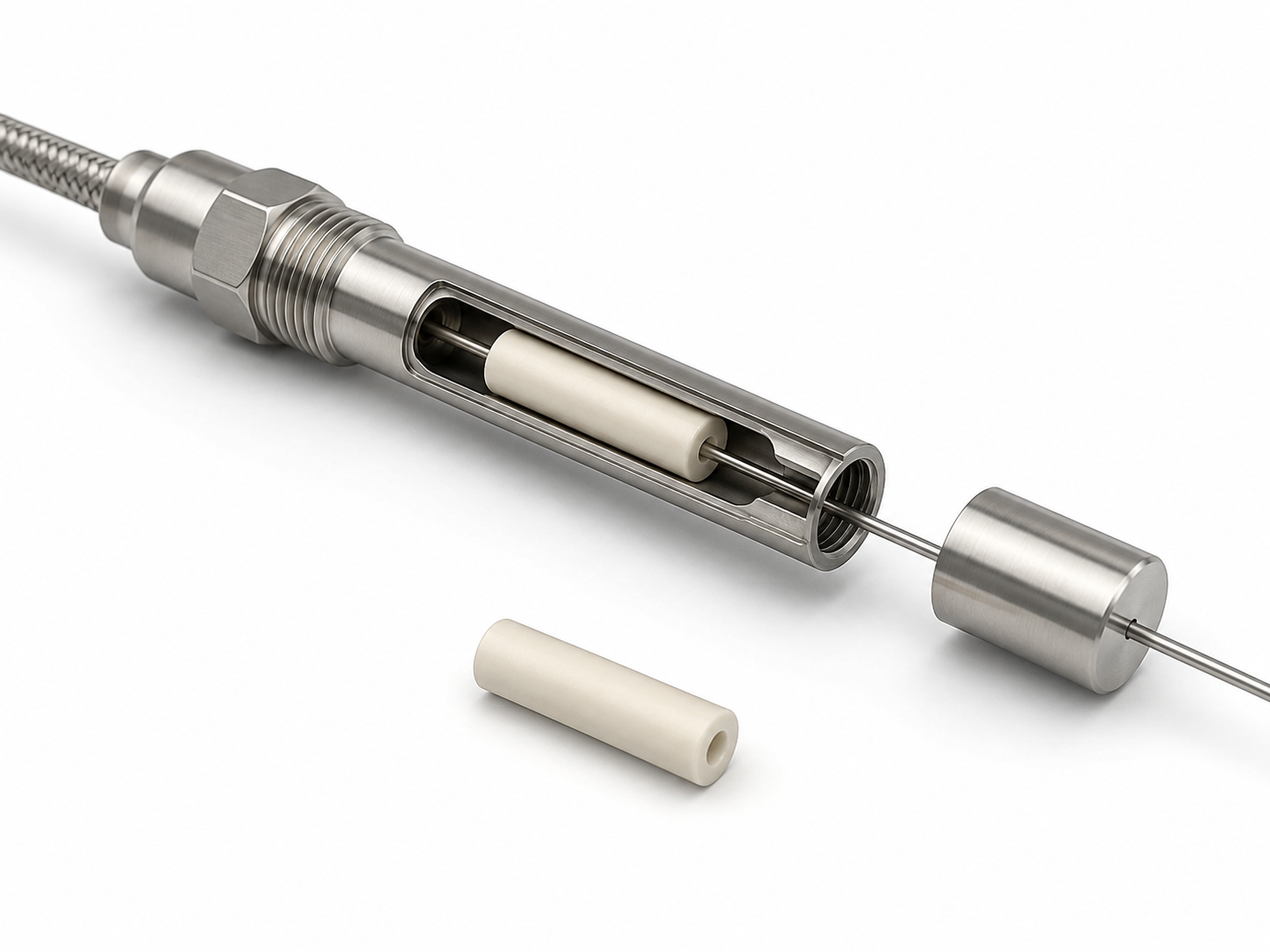
Caso de aplicación: Componente aislante cerámico personalizado para un conjunto de sonda de temperatura
Un cliente estaba desarrollando una sonda de temperatura para un entorno de trabajo de alta temperatura. El diseño original utilizaba un pequeño soporte metálico cerca del área de detección, pero necesitaban un mejor aislamiento eléctrico y un rendimiento más estable durante el calentamiento y enfriamiento repetidos.
La pieza no era la sonda completa, sino un pequeño componente aislante cerámico dentro del conjunto. El tamaño de referencia era de aproximadamente 3,5 mm de diámetro exterior, 1,2 mm de diámetro interior y 18 mm de longitud. Los requisitos clave eran resistencia al calor, aislamiento eléctrico, tamaño de orificio estable y montaje suave con la carcasa metálica.

Después de revisar el dibujo, sugerimos cerámica de alúmina para el primer prototipo porque proporciona un buen aislamiento, resistencia al desgaste y resistencia al calor con un costo relativamente estable. También agregamos un pequeño chaflán para reducir el astillado del borde durante el montaje y controlamos las dimensiones clave dentro de ±0,02 mm.
Para la primera etapa, produjimos 20 muestras de prototipo mediante mecanizado y rectificado de cerámica. Después de las pruebas de montaje, el cliente confirmó que la pieza cerámica mejoraba el aislamiento entre la estructura de detección y la carcasa metálica, manteniendo un ajuste estable.
Una vez aprobado el prototipo, el proyecto pasó a un lote pequeño de 500 piezas para pruebas funcionales adicionales. Para una futura producción de mayor volumen, también se puede evaluar el CIM si el diseño permanece estable.

Puntos de diseño que afectan el costo de la pieza cerámica
La cerámica es dura, resistente al desgaste y estable, pero también es más frágil que el metal. Un diseño que es fácil de mecanizar en aluminio puede no ser adecuado para cerámica sin ajustes.
Esquinas internas afiladas, paredes muy delgadas, orificios pequeños profundos y cambios bruscos de espesor pueden aumentar el riesgo de producción. Si todas las dimensiones se marcan con una tolerancia muy ajustada, el costo también puede aumentar rápidamente porque se necesitará más tiempo de rectificado e inspección.
Para un diseño de pieza cerámica más eficiente, sugerimos identificar primero las áreas verdaderamente críticas. Por ejemplo, un orificio utilizado para el montaje puede necesitar una tolerancia ajustada, pero una superficie exterior sin contacto puede no necesitarla. Una superficie deslizante puede necesitar pulido, pero una superficie oculta no funcional solo puede necesitar un rectificado normal o un acabado tal como sale del horno.
Este tipo de discusión es importante antes de la producción. Un pequeño cambio de diseño, como agregar un radio, ajustar el grosor de la pared o relajar una tolerancia no crítica, puede mejorar el rendimiento y reducir el costo.
Desde la revisión del dibujo hasta la producción
Para las piezas cerámicas personalizadas, generalmente comenzamos con la revisión del dibujo. La revisión incluye la selección del material, la ruta del proceso, la viabilidad de la tolerancia, el acabado superficial, el método de inspección y los posibles riesgos de fabricación.
Si la pieza aún se encuentra en la etapa de prototipo, podemos recomendar primero el mecanizado de cerámica. Esto permite al cliente probar el diseño sin abrir un molde. Si el diseño se vuelve estable y la demanda anual aumenta, se puede evaluar el CIM o la producción basada en herramientas.
Para la producción por lotes, la consistencia es más importante que hacer una muestra perfecta. La producción de cerámica implica la preparación del material, el conformado, el desunido, el sinterizado, el mecanizado, el rectificado y la inspección. Cada paso puede afectar las dimensiones y la apariencia finales, por lo que el control del proceso es importante.
Qué proporcionar para una solicitud de cotización de piezas cerámicas
Para cotizar piezas cerámicas personalizadas con precisión, proporcione un dibujo 2D con tolerancia, un modelo 3D si está disponible, el requisito de material, la cantidad, el entorno de aplicación y cualquier dimensión crítica. Los formatos de archivo 3D comunes incluyen STEP, STP, X_T e IGS.
Si no está seguro acerca del material, díganos la temperatura de trabajo, si la pieza necesita aislamiento eléctrico, si tiene contacto deslizante o de desgaste, y cómo se montará. Esta información nos ayuda a recomendar el material cerámico y el método de producción correctos.
En XY-GLOBAL, podemos soportar piezas cerámicas personalizadas desde el prototipo hasta el lote pequeño y la producción por lotes. Nuestro enfoque es ayudar a los clientes a convertir los dibujos de piezas cerámicas en componentes fiables con el material, el proceso y el control de inspección adecuados.
Preguntas frecuentes
¿Pueden cotizar piezas cerámicas personalizadas solo con un dibujo 2D?
Sí, podemos revisar un dibujo 2D primero. Para piezas complejas, se recomienda un modelo 3D porque nos ayuda a verificar la geometría, las áreas de mecanizado y los posibles riesgos de producción de manera más clara.
¿Pueden ayudar a elegir entre alúmina y circonia?
Sí. La alúmina se selecciona a menudo por su aislamiento, resistencia al calor y control de costos. La circonia se considera generalmente cuando se necesita una mejor tenacidad, resistencia al desgaste o acabado superficial. La elección final depende de la condición de trabajo y del dibujo.
¿Necesitan todas las piezas cerámicas rectificado después del sinterizado?
No. Algunas superficies no críticas pueden permanecer tal como salen del horno, pero las dimensiones críticas como los orificios, el diámetro exterior, el grosor, la planitud o las superficies de montaje pueden requerir rectificado o mecanizado secundario.
¿Es el CIM adecuado para prototipos?
Por lo general, el CIM es más adecuado para piezas pequeñas y complejas con demanda de lotes repetidos porque se requiere utillaje. Para prototipos iniciales o pedidos de bajo volumen, el mecanizado de cerámica suele ser más práctico.
¿Pueden proporcionar informes de inspección?
Sí. Dependiendo de los requisitos del dibujo, podemos proporcionar inspección dimensional, inspección CMM, inspección de rugosidad superficial y estándares de inspección visual.
Por qué se utilizan piezas cerámicas personalizadas en proyectos de ingeniería
Las piezas cerámicas personalizadas se utilizan ampliamente en equipos donde la estabilidad importa más que la simple fabricación de bajo costo. En comparación con muchos metales y plásticos, las cerámicas técnicas pueden ofrecer una excelente dureza, resistencia al desgaste, resistencia a la corrosión, estabilidad térmica y aislamiento eléctrico.
En proyectos reales, las piezas cerámicas se utilizan a menudo como:
- Componentes aislantes en equipos eléctricos o electrónicos
- Manguitos, guías, pasadores, rodillos y boquillas resistentes al desgaste
- Piezas resistentes al calor para sensores, calentadores, sondas y dispositivos industriales
- Piezas estructurales de precisión utilizadas en equipos médicos, ópticos, semiconductores y de automatización
- Carcasas, soportes, espaciadores y pequeños componentes complejos de cerámica fabricados mediante CIM o mecanizado de precisión
La ventaja de la cerámica es clara, pero el desafío también es claro: los materiales cerámicos son duros y frágiles. Esto significa que el diseño de la pieza debe revisarse cuidadosamente antes de la producción. Las esquinas afiladas, las paredes muy delgadas, los orificios profundos y los cambios bruscos de espesor pueden aumentar el riesgo de agrietamiento, deformación o bajo rendimiento.
Un buen proveedor de piezas cerámicas no solo debe cotizar el dibujo. También debe verificar si el diseño es adecuado para la fabricación de cerámica.


Compartir:
Bloques Aislantes de Cerámica de Alúmina a Medida para Aplicaciones de Aislamiento de Precisión
Moldeo por Inyección de Metal de Titanio para Piezas MIM de Titanio Personalizadas