

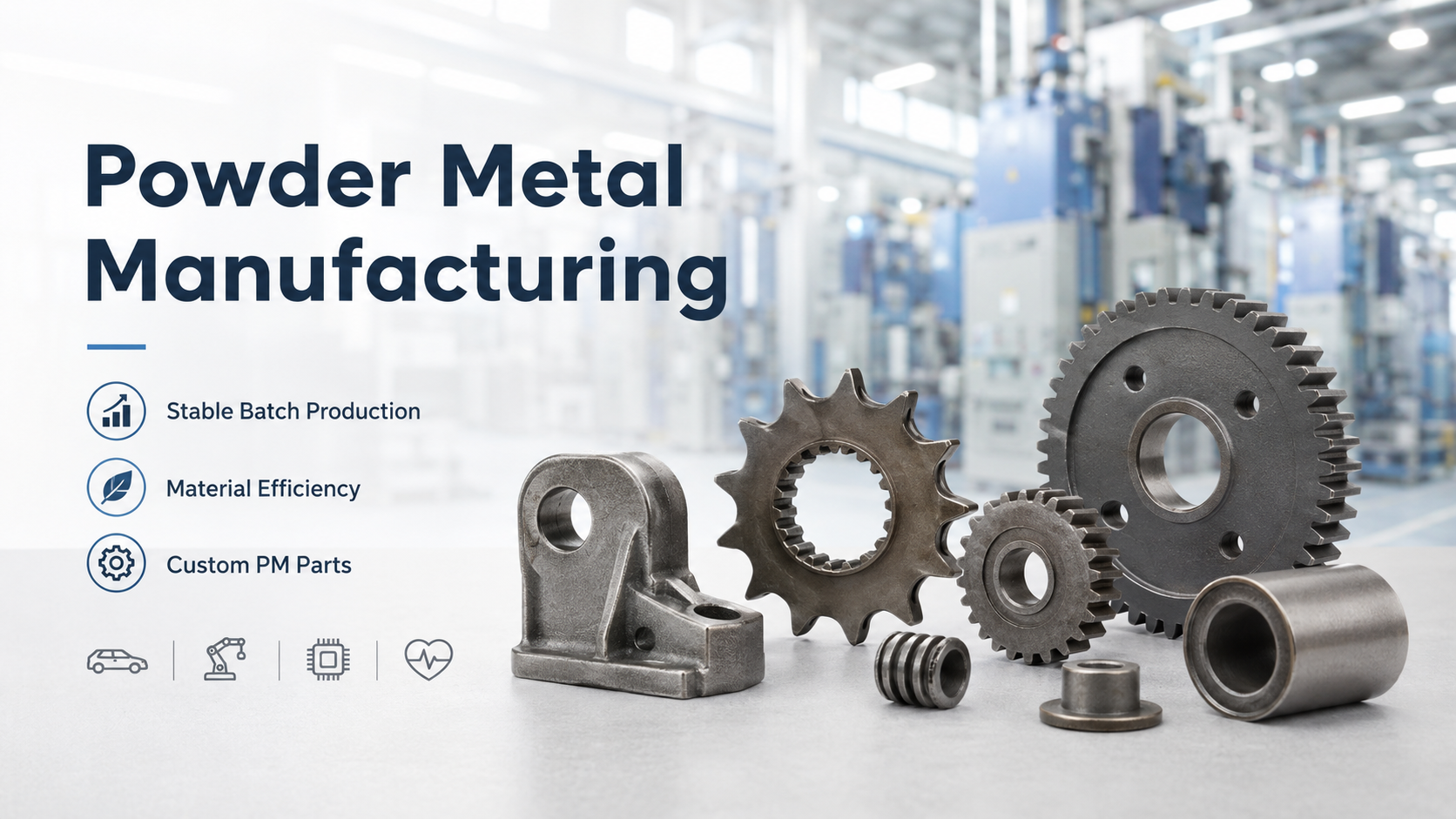

Comprendiendo la "Naturaleza" de la Fabricación de Metal en Polvo: Qué Es
Proceso de Fabricación de Metal en Polvo: Cómo Funciona

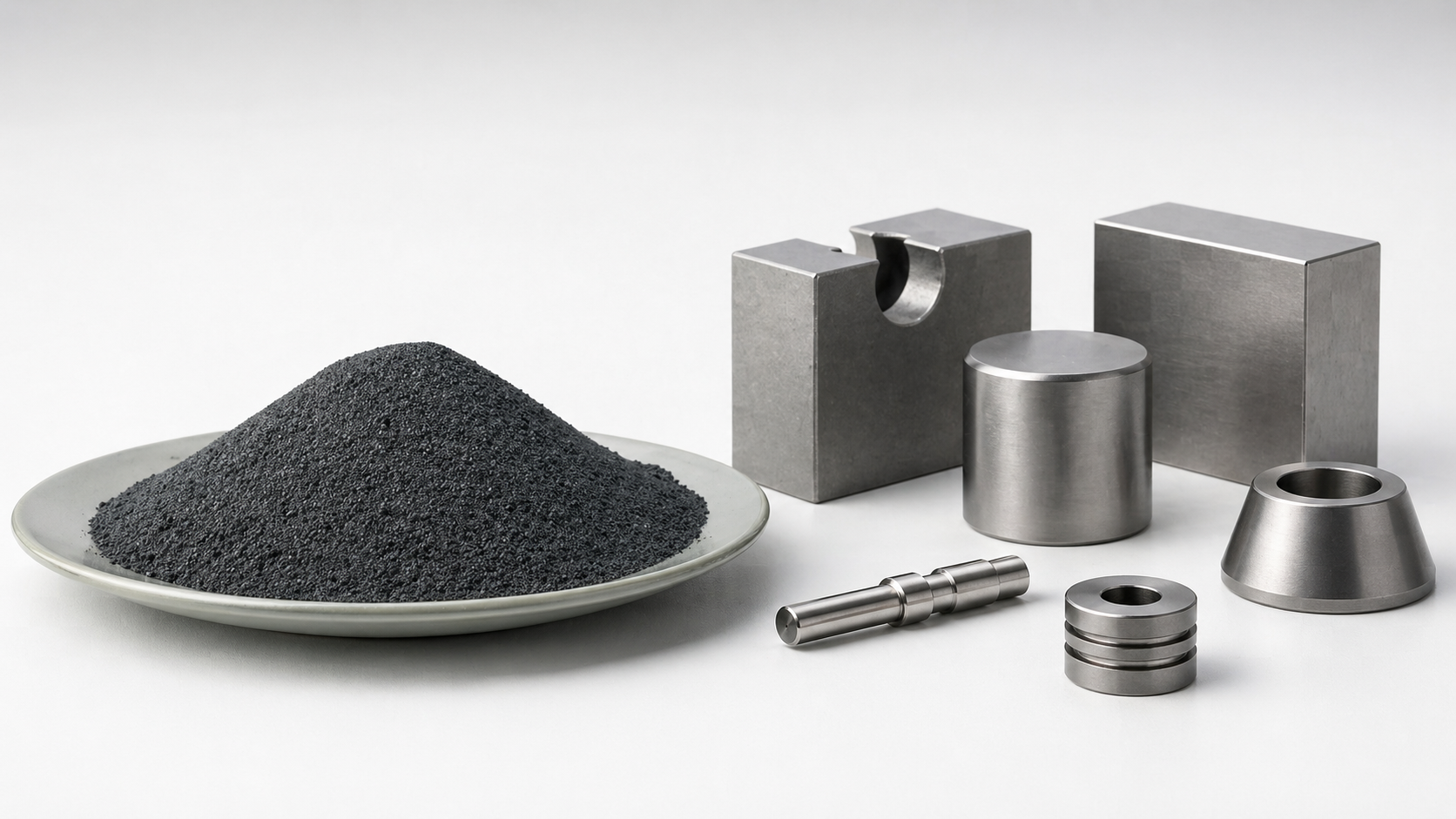
1. Mezcla de polvos
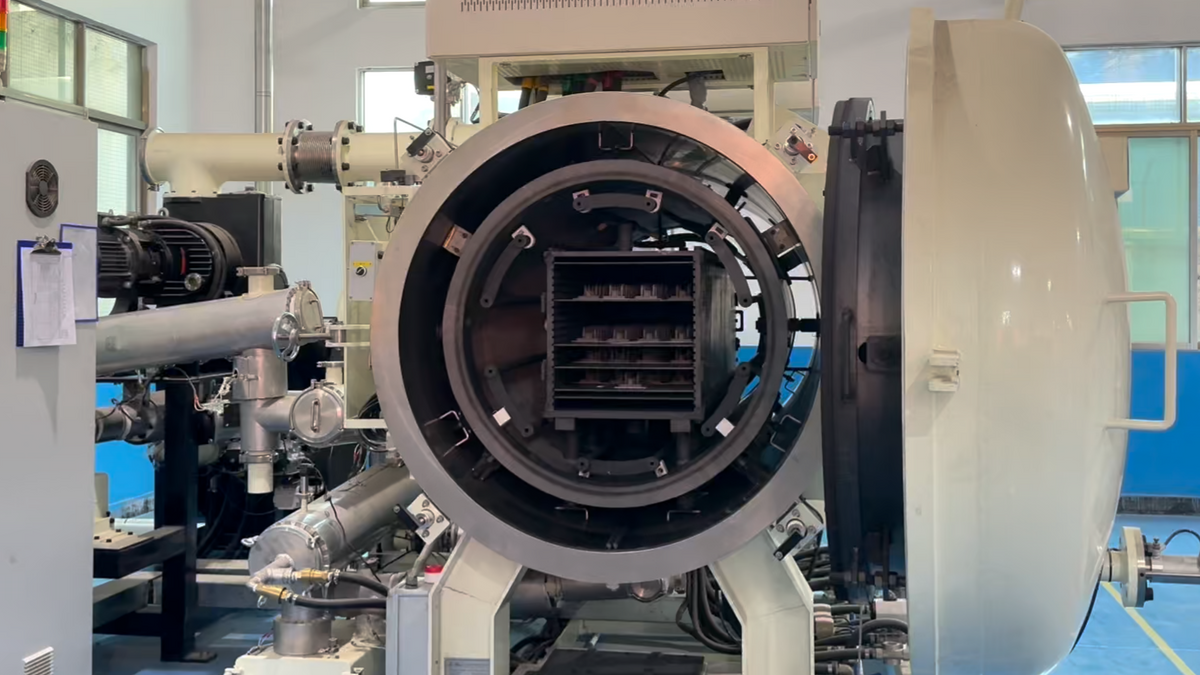
2. Compactación
3. Sinterización
4. Dimensionamiento y Procesamiento Secundario
Beneficios y límites de la fabricación de metal en polvo
La fabricación de metal en polvo tiene varios beneficios claros:
- Reducción de residuos de material
Dado que la pieza se forma cerca de su forma final, hay menos desperdicio de material en comparación con el mecanizado de la misma pieza a partir de un bloque de metal sólido.
- Eficiencia de producción
Una vez que las herramientas están listas y el proceso es estable, la fabricación de metal en polvo puede soportar la producción por lotes repetible. Esto la hace adecuada para piezas de volumen medio a alto.
- Repetibilidad del diseño
Funciona bien para ciertas formas que se repiten en grandes cantidades, como engranajes, casquillos, cojinetes y componentes estructurales. Para diseños adecuados, las piezas de PM pueden reducir el tiempo de mecanizado y ayudar a controlar los costos.
- Flexibilidad de materiales
Se pueden seleccionar diferentes polvos metálicos y combinaciones de aleaciones en función de la resistencia, la resistencia al desgaste, las necesidades de lubricación, las propiedades magnéticas, la resistencia a la corrosión o el objetivo de coste.
Sin embargo, la fabricación de metal en polvo también tiene límites. Por lo general, requiere herramientas, por lo que puede no ser adecuada para piezas de muy bajo volumen o diseños que cambian con frecuencia. Algunas características complejas pueden ser difíciles de prensar directamente. Ciertos orificios, roscas, superficies planas o áreas de tolerancia ajustada pueden necesitar dimensionamiento o mecanizado secundario después de la sinterización.
Así que la clave no es simplemente preguntar si la metalurgia de polvos es buena o mala. La mejor pregunta es:
¿El diseño de la pieza, el volumen de producción, los requisitos de material y la necesidad de tolerancia coinciden con el proceso de PM?
Materiales utilizados en la fabricación de metal en polvo
| Tipo de material | Uso común |
| Materiales a base de hierro | Engranajes, piezas estructurales, componentes mecánicos |
| Acero inoxidable | Piezas resistentes a la corrosión, componentes industriales y médicos |
| Materiales a base de cobre | Aplicaciones eléctricas o térmicas |
| Bronce | Cojinetes, bujes, piezas autolubricantes |
| Aluminio | Componentes ligeros |
| Materiales a base de tungsteno | Aplicaciones de alta densidad o resistentes al desgaste |
| Titanio | Aplicaciones ligeras y de alto rendimiento |
| Combinaciones de aleaciones personalizadas | Requisitos especiales de resistencia, desgaste o aplicación |
Aplicaciones comunes de la fabricación de metal en polvo
| Industria | Piezas comunes |
| Automoción | Engranajes, piñones, casquillos, cojinetes, piezas relacionadas con el motor |
| Equipos industriales | Piezas de desgaste, piezas estructurales, componentes mecánicos |
| Electrónica | Contactos eléctricos, pequeños componentes metálicos, piezas magnéticas |
| Equipos médicos | Pequeños componentes metálicos de precisión, piezas estructurales |
| Herramientas eléctricas | Engranajes, cojinetes, piezas de transmisión |
| Maquinaria | Acoplamientos, espaciadores, manguitos, piezas metálicas funcionales |
| Galvanizado/recubrimiento | Mejorar la resistencia a la corrosión, el aspecto o la función de la superficie |
| Desbarbado | Eliminar bordes afilados o partículas sueltas |
| Inspección final | Confirmar dimensiones, dureza, densidad y características clave |
Cómo XY-GLOBAL Apoya las Piezas Personalizadas de Metalurgia de Polvos
Con más de 15 años de experiencia en fabricación, XY-GLOBAL apoya la creación de piezas personalizadas de metalurgia de polvos, desde la revisión del diseño hasta la producción estable en serie.
Nuestro equipo puede ayudar con la selección de materiales, la revisión DFM (diseño para fabricación), el herramental, la compactación, la sinterización, el dimensionamiento, el mecanizado secundario, el tratamiento térmico, el acabado de superficies y la inspección. Esto permite a los clientes evaluar la ruta de fabricación completa antes de que comience la producción.
Para proyectos personalizados de PM, nos centramos en la facilidad de fabricación, la estabilidad de la densidad, la consistencia dimensional, la planificación del postprocesamiento y la inspección de características clave. Si una pieza tiene orificios críticos, roscas, superficies planas o áreas de ensamblaje, el mecanizado secundario se puede planificar con anticipación para reducir el riesgo de producción posterior.
El objetivo no es solo producir una muestra, sino construir piezas de PM que puedan producirse de manera consistente y utilizarse de manera confiable en la aplicación final.
Resumen: Construcción de Piezas Confiables de Metalurgia de Polvos
La fabricación de metales en polvo es un proceso práctico para producir piezas metálicas personalizadas con buena eficiencia de material, geometría repetible y ventajas de coste en la producción en volumen.
Pero una pieza de PM exitosa no es solo cuestión de prensado y sinterización. También depende del material adecuado, el diseño fabricable, la herramienta apropiada, la sinterización controlada, el postprocesamiento adecuado y la inspección fiable.
Para diseños de piezas simples y estables, la fabricación de metales en polvo puede ser una sólida alternativa al mecanizado CNC completo u otros procesos de conformado de metales. Para piezas más exigentes, la revisión DFM, el dimensionamiento, el mecanizado secundario, el tratamiento térmico o el acabado superficial pueden ser necesarios para cumplir con los requisitos finales.
Si está desarrollando piezas personalizadas de metal en polvo, XY-GLOBAL puede ayudarle a revisar sus dibujos, materiales, requisitos de tolerancia, necesidades de postprocesamiento y volumen de producción.
Póngase en contacto con nosotros para hablar sobre su proyecto de fabricación de metales en polvo y encontrar una ruta práctica desde la revisión del diseño hasta la producción por lotes estable.
Últimas historias

- Al seleccionar una opción, se actualiza toda la página.
- Se abre en una nueva ventana.
Compartir:
MIM vs. PM: Cuándo elegir el moldeo por inyección de metal en lugar de la pulvimetalurgia tradicional
Qué considerar antes de ordenar piezas cerámicas personalizadas